Serving Cartersville, GA & nearby
(770) 230-6001
Cartersville, GA

What an Older Garage Door Is Doing to Your House in Cartersville

Cartersville homes built between 1964 and 2007 often still carry their original garage door. Here's what that means once the cold moves in and when it's worth a call.

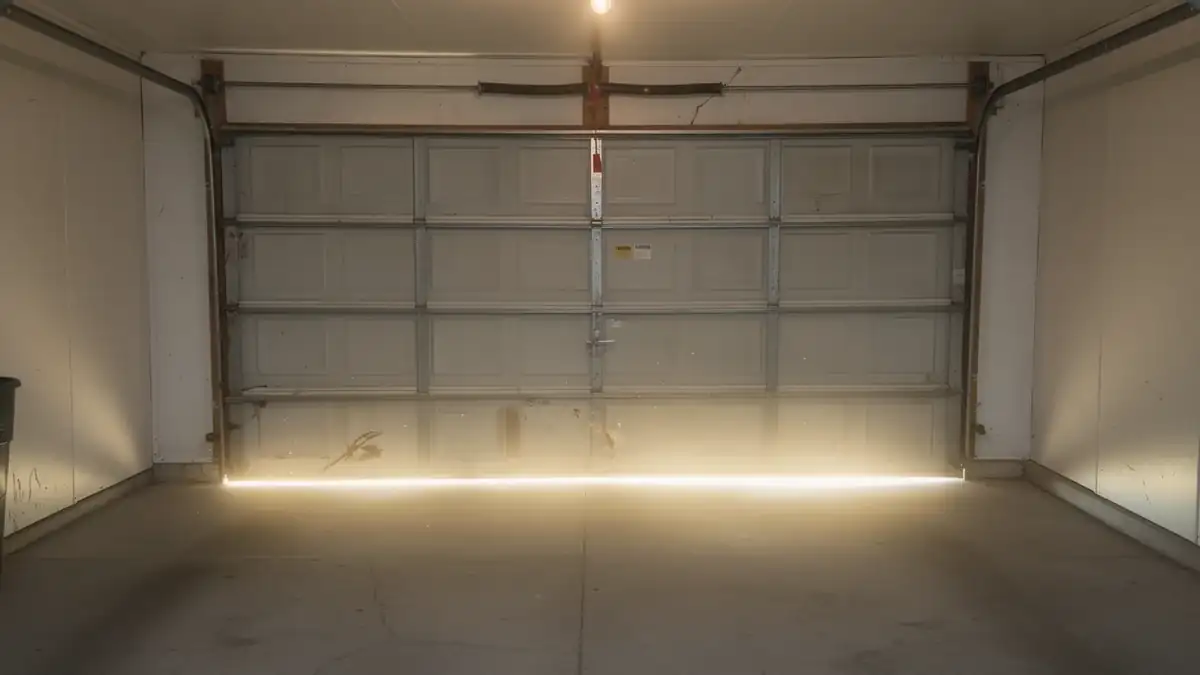
A closed garage door has a broken torsion spring and light shining underneath.

The Situation

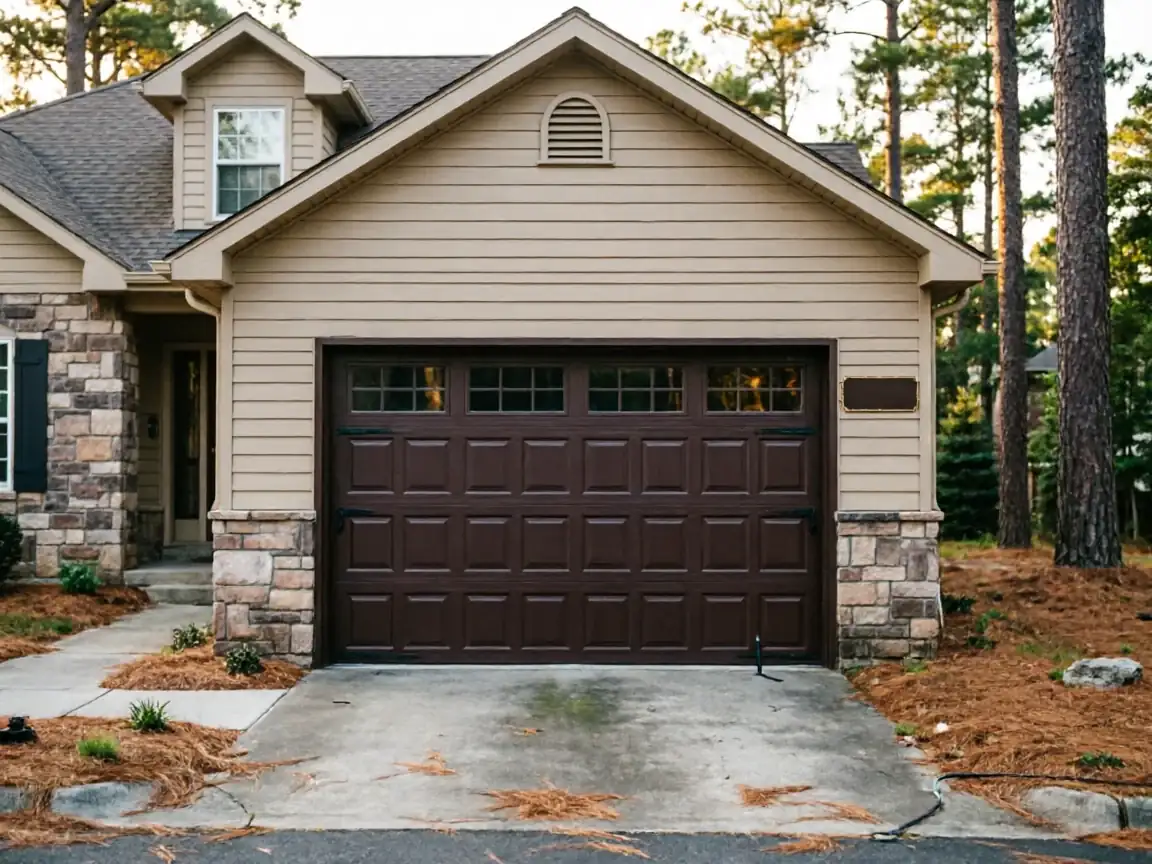
Housing across this service area went up mostly between 1964 and 2007, with the median home dating to 1987. That stretch covers nine named areas around Cartersville, and most of them share the same pattern: a door that's original to the house, or close to it. A door installed in the 1980s or early 90s was built to the standards of that decade, which is to say a single layer of steel with little or nothing behind it. Nobody was thinking about insulation when that door went in - it was a barrier against weather, not a thermal envelope. If your house falls into that median build year, there's a decent chance the door hanging in your garage right now has never been swapped. That's not a flaw in the house. It's just what an entry-level door from that era was, and most of them are still doing their job mechanically even if they're doing nothing for the room behind them. The question isn't whether the door is old. In a lot of these neighborhoods, it is. The question is whether that matters for what you're using the garage for now.

What the Weather Here Does to It

This area sits in a cold-moderate climate band - real winter cold, but not the kind that demands heavy-duty equipment year-round. For an uninsulated steel door from the 1980s or 90s, that swing matters more than people expect. A single layer of steel conducts temperature fast. On a cold morning the inside face of the door can run close to outdoor temperature, and if there's any humidity in the garage, that's where condensation shows up - on the door, on tools hung near it, sometimes dripping onto the floor. Over enough winters, that moisture cycle finds the weak points: seams, the bottom seal, any spot where rust can start on hardware that was never coated for it. It's not dramatic. It's slow. A door built for a 1987 house wasn't wrong for its time, but a cold-moderate climate asks more of bare steel than a mild one would. If you've noticed the door sweating on cold mornings, or the bottom seal cracking faster than it used to, that's the climate doing exactly what it does to a door of this age and this construction.

When to Call Someone

Call when the door is doing something beyond cosmetic wear: it's noticeably colder in the garage than it used to be with the door shut, you're seeing rust spreading rather than spot surface rust, the bottom seal is torn enough that light or air comes through along the whole width, or the panels are visibly bowing. Those are signs the original steel and hardware from that 1980s-to-2000s build window are past doing their one job. One honest limitation: we don't carry insulated replacement panels for every original door still out there - some older sizes and track configurations are long discontinued, and ordering a match can mean a wait. For those, a full door swap is usually faster and often cheaper than chasing parts for a 30-plus-year-old frame. We'll tell you straight if that's where you are instead of patching something that won't hold.
Doing Nothing For Now

Plenty of these original doors are fine to leave alone. If the garage is just for parking and storage, and the door still opens, seals reasonably, and isn't rusting through, there's no reason to replace it on a schedule. With median household income in this area around $76,424 and roughly 8,765 owner-occupied houses out of 14,336 households, a lot of owners here are weighing a garage door against other house priorities, and that's a fair call. Waiting costs you nothing mechanical as long as the door is still sound. What waiting does cost is comfort, if you're using that space for anything beyond the car - a workbench, a gym, a spot you walk through to get inside. That's a personal call, not a mechanical one, and we'd rather tell you it can wait than talk you into a door you don't need yet.

How it works

From “it’s stuck” to “it’s fixed”

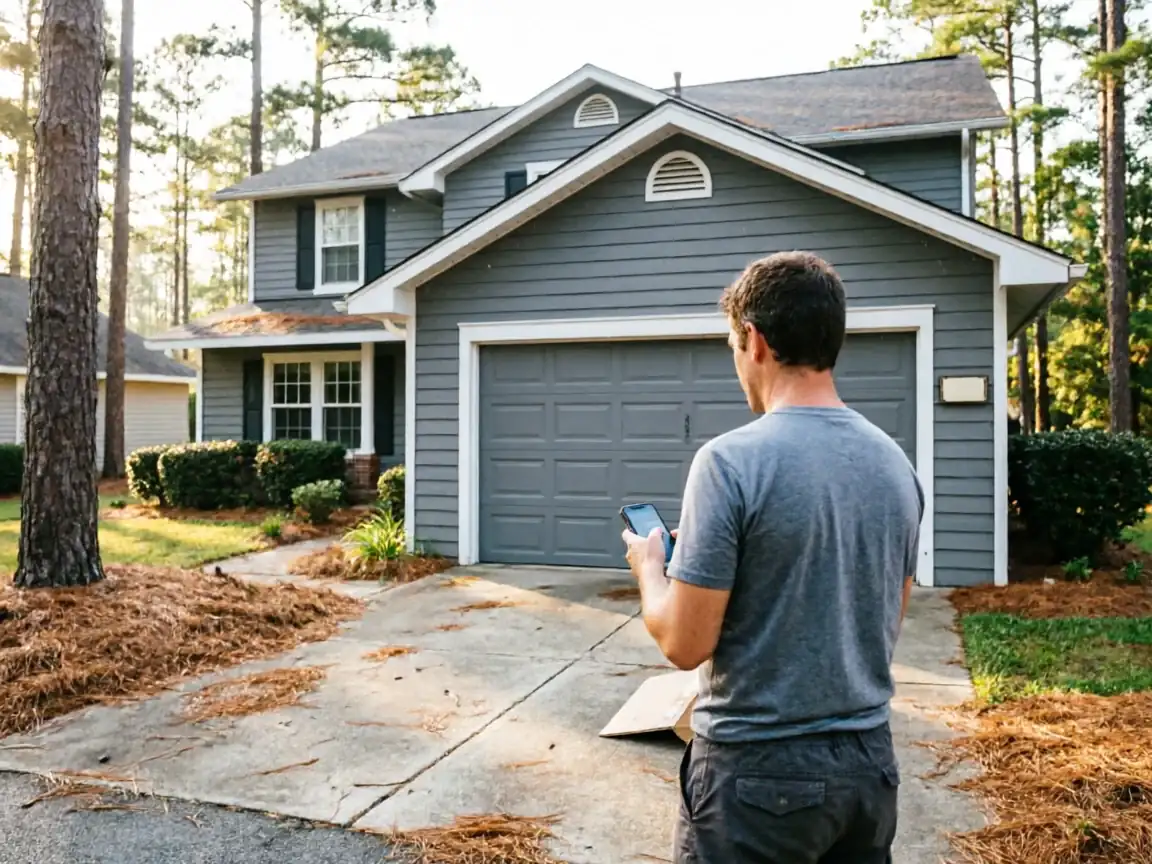
A man stands in a driveway looking at his phone in front of a house.

Tell us what’s wrong

Describe the symptom - won’t open, loud bang, opener runs but the door won’t move.

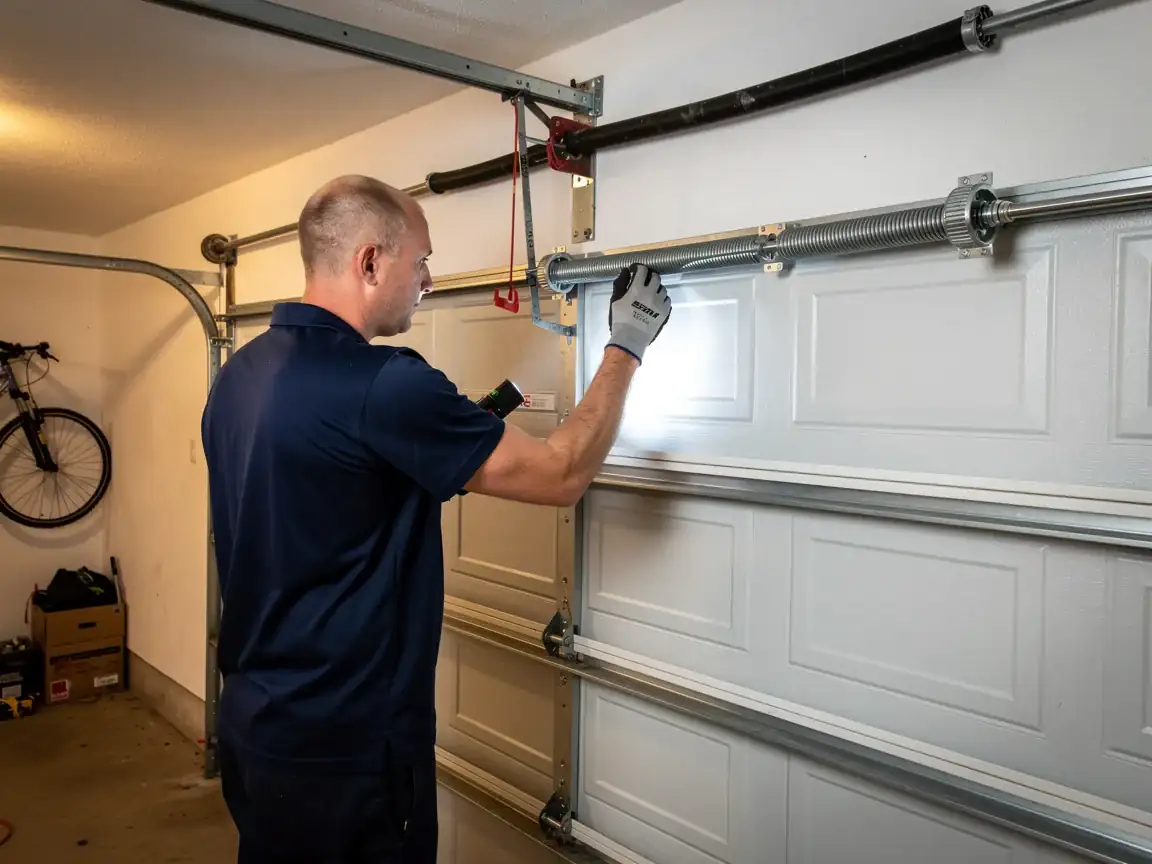
A technician shines a flashlight on a garage door torsion spring.

On-site diagnosis

A technician tests the door under power and by hand and finds what actually failed.

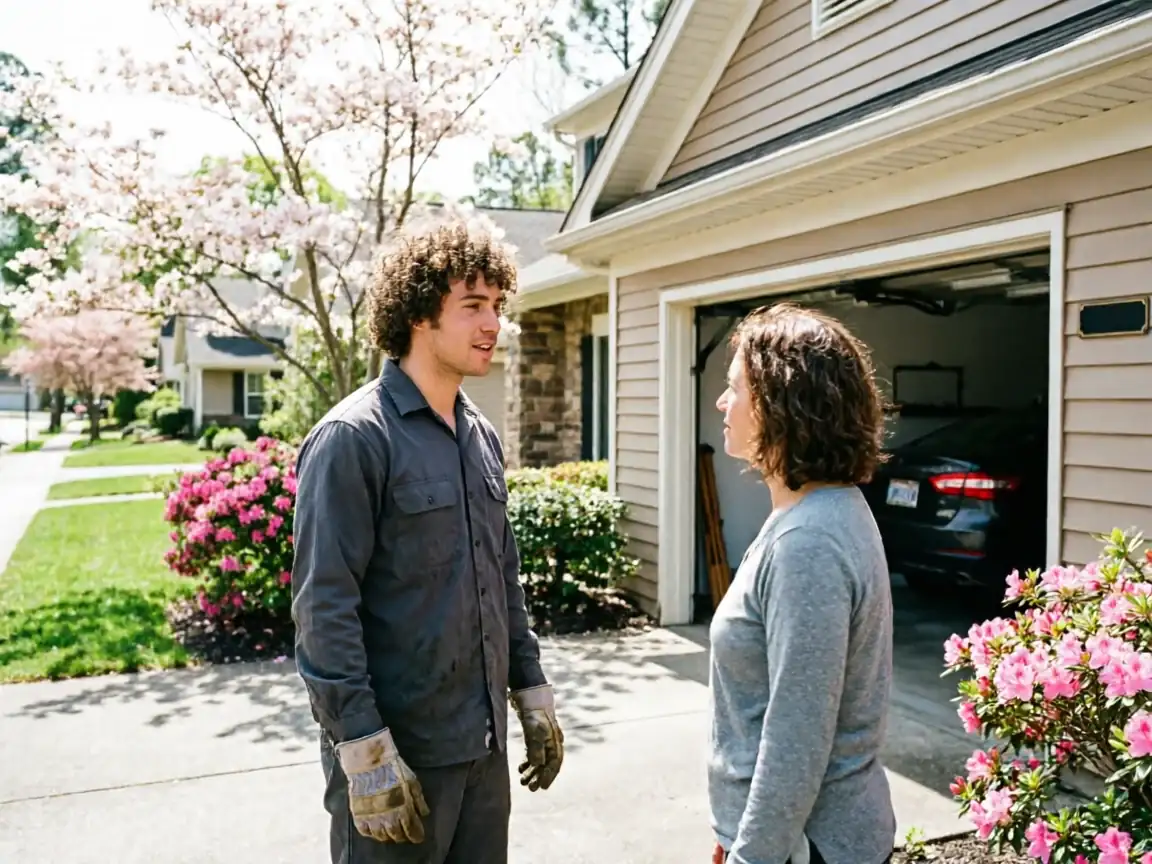
A technician wearing work gloves talks to a woman in front of an open garage.

Clear, up-front plan

You get the fix that’s needed and what drives the cost - before any work starts.

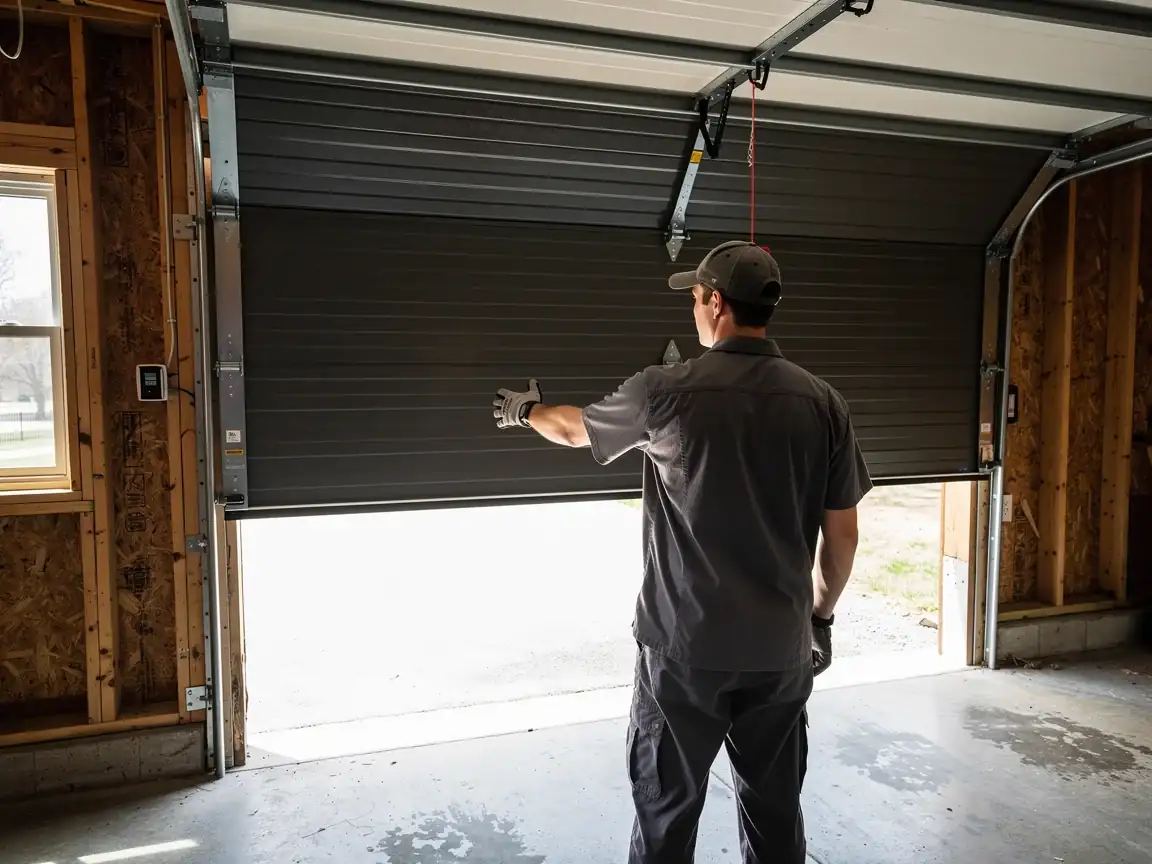
A technician in a gray shirt and cap stands in a garage, facing a partially open garage door.

Repaired & tested

The repair is done, the door is set true and tested, and the work area left clean.

Not sure which repair your door needs in Cartersville, GA? Describe what it’s doing - every job starts with a diagnosis.

How we work

What to expect

  • Diagnosis firstEvery visit starts by finding what actually failed - not a pre-written parts list.
  • The right part for the doorSprings and openers matched to the door’s weight and age, so the fix holds up.
  • Straight answersWhen a repair makes more sense than a replacement - or the reverse - you hear it plainly.
  • Clean, careful workTension released safely, hardware set true, the door tested under power before we leave.
What we do

Garage Door Services

Repair and installation work for Cartersville homes and businesses.

Questions

Frequently asked

Straight answers about garage door repair in Cartersville. Still unsure? Ask us directly.

Is my garage door original to the house if it was built in the 80s?

Often, yes. Most houses in this area date to the 1964-2007 range with a median build year of 1987, and a lot of doors from that era were never replaced - just serviced. If yours has the original torsion hardware and a single layer of steel with no backing, that's consistent with the age.

Why does my garage door sweat in winter?

That's condensation forming on an uninsulated steel door when the cold outdoor side meets warmer, humid garage air - common in this cold-moderate climate on doors built without insulation behind the steel. It's not a leak or a defect, just physics acting on an older door.

Should I insulate my old door or replace it?

Depends on the door's condition. If the panels, track, and seal are sound, insulating can help. If you're also seeing rust or bowing from age, a new insulated door is usually the better money, especially since parts for some older original doors are hard to source.

How do I know if it's worth repairing versus replacing?

If the problem is isolated - a seal, a roller, a sensor - repair it. If the steel itself is rusting through or the panels are warping, you're fighting the age of the door itself, and that's usually a replacement conversation, not a repair one.

Ready to get your garage door sorted?

Tell us what it’s doing and where you are in Cartersville - we’ll take it from there.

Request a QuoteCall