The Situation
Most of the housing across the Cartersville service area went up between 1964 and 2007
With the typical build year landing around 1987. That's not a random spread - across the nine areas we work in, the bulk of that stock is 1980s and 90s construction, which means a lot of doors out there are original to the house or close to it. A door from that era is usually a steel sectional on a torsion spring, sometimes with an opener that's been swapped once already and sometimes still running the unit that came with the house.
That age range matters because it's the line where parts get harder to match
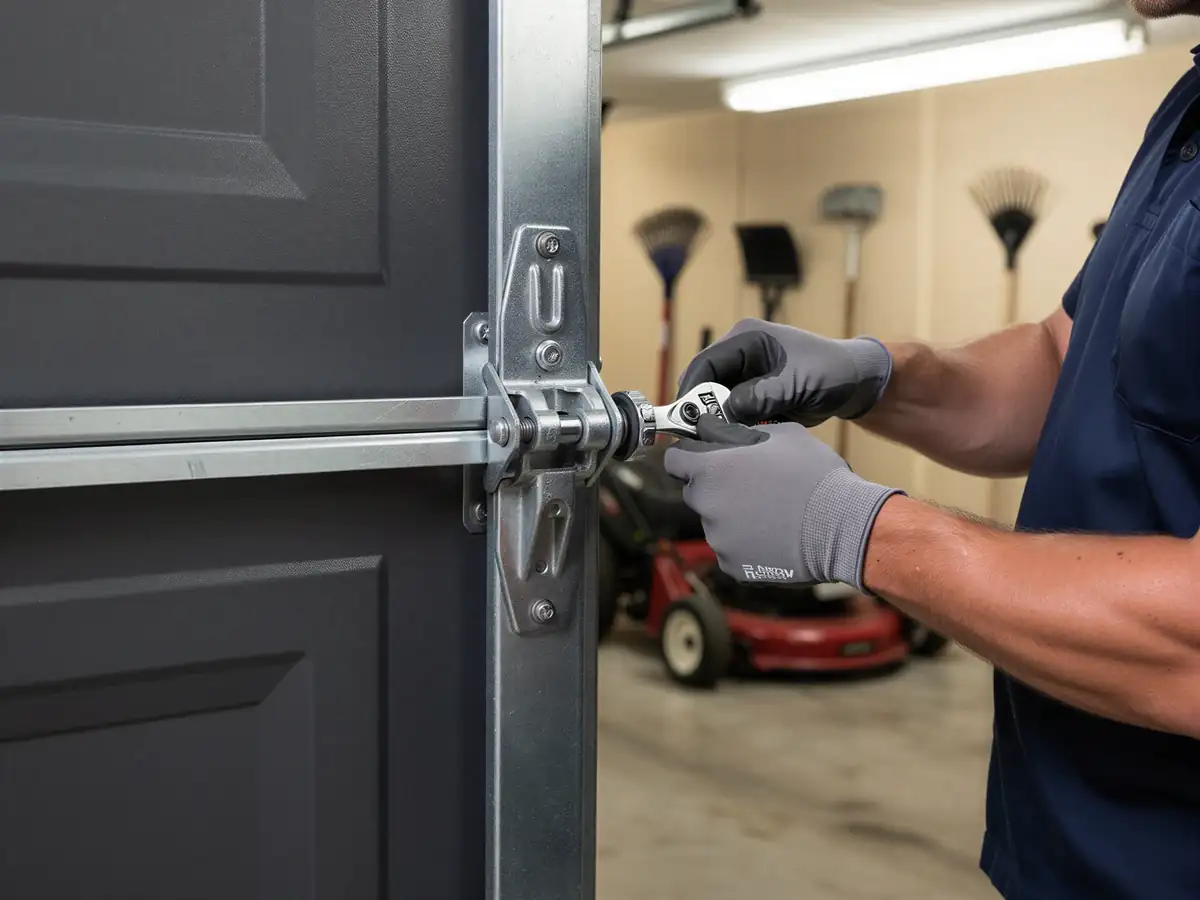
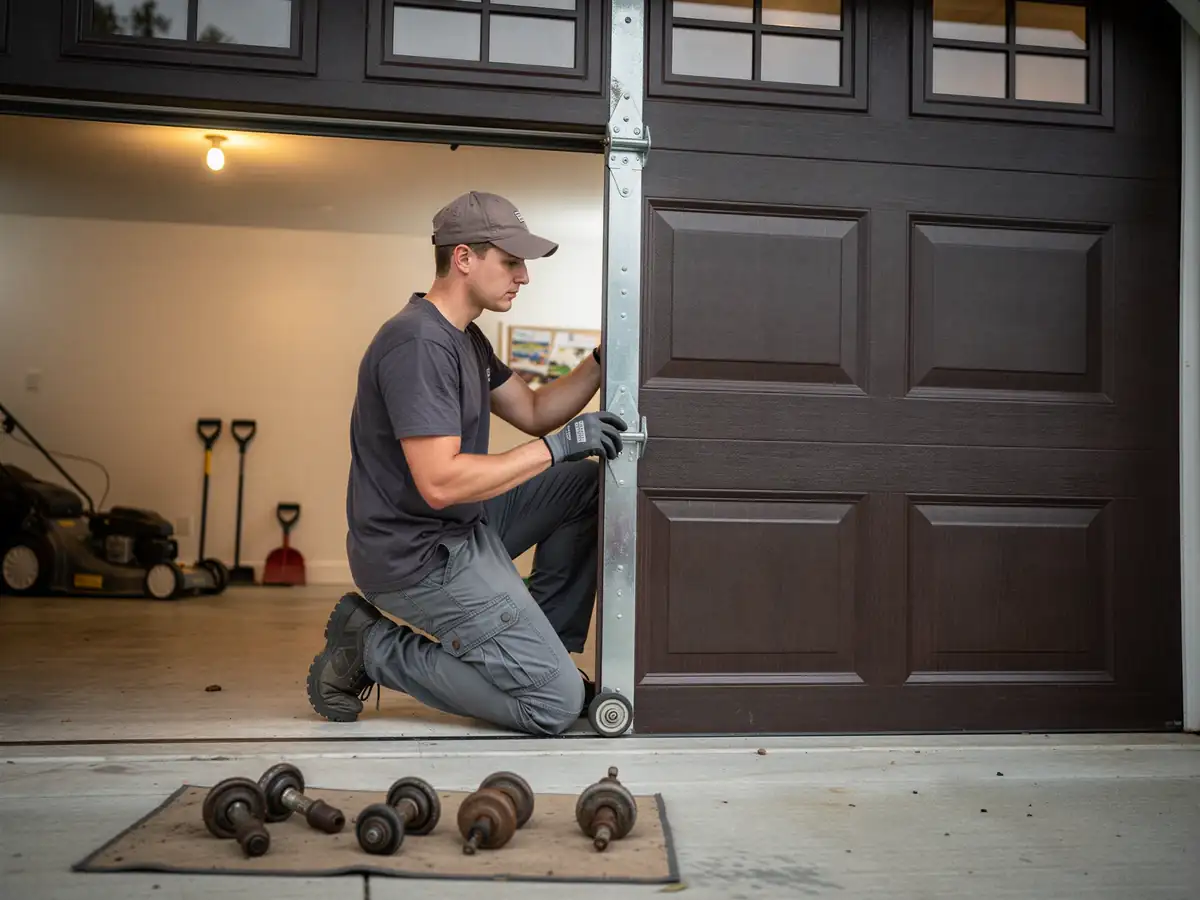
Track width, drum size, and spring wind on a late-80s door aren't always what a hardware store stocks off the shelf today. Doesn't mean the door is junk - a lot of these are solid steel with a lot of life left in the panels, even if the springs and rollers are tired. The question isn't the door's birth year by itself. It's whether the panels and track are still square, or whether rust and wear have gone past the point where a repair holds.
What the Weather Here Does to It
Cartersville sits in a cold-moderate climate band, which means the door hardware goes through real temperature swings across a year without the deep-freeze extremes you'd get further north. That cycle still does work on a 30-year-old door. Steel contracts in cold mornings and expands again by afternoon, and over a few decades that cycling loosens roller brackets, dries out the factory lubrication on hinges and springs, and lets moisture find its way into seams that used to be tight.
On a house built in the 1980s or 90s, that's three-plus decades of this cycle working on the same spring and the same track alignment. It shows up as a door that's noisier than it used to be, a spring that's lost some tension, or a bottom seal that's cracked and letting in draft. None of that means the door's done - it means the parts that move and flex have taken the wear you'd expect from that much time in this climate. A door that's been kept lubricated and adjusted holds up noticeably better than one that hasn't.
When to Call Someone
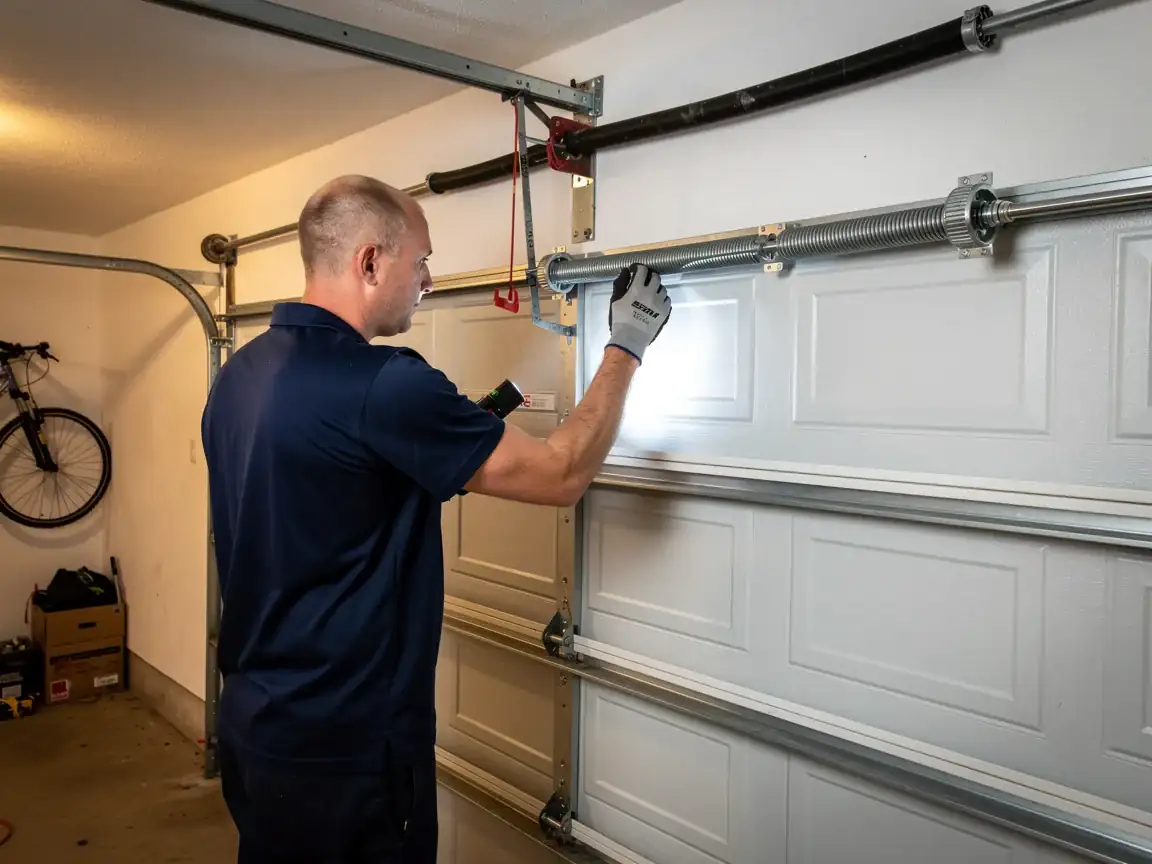
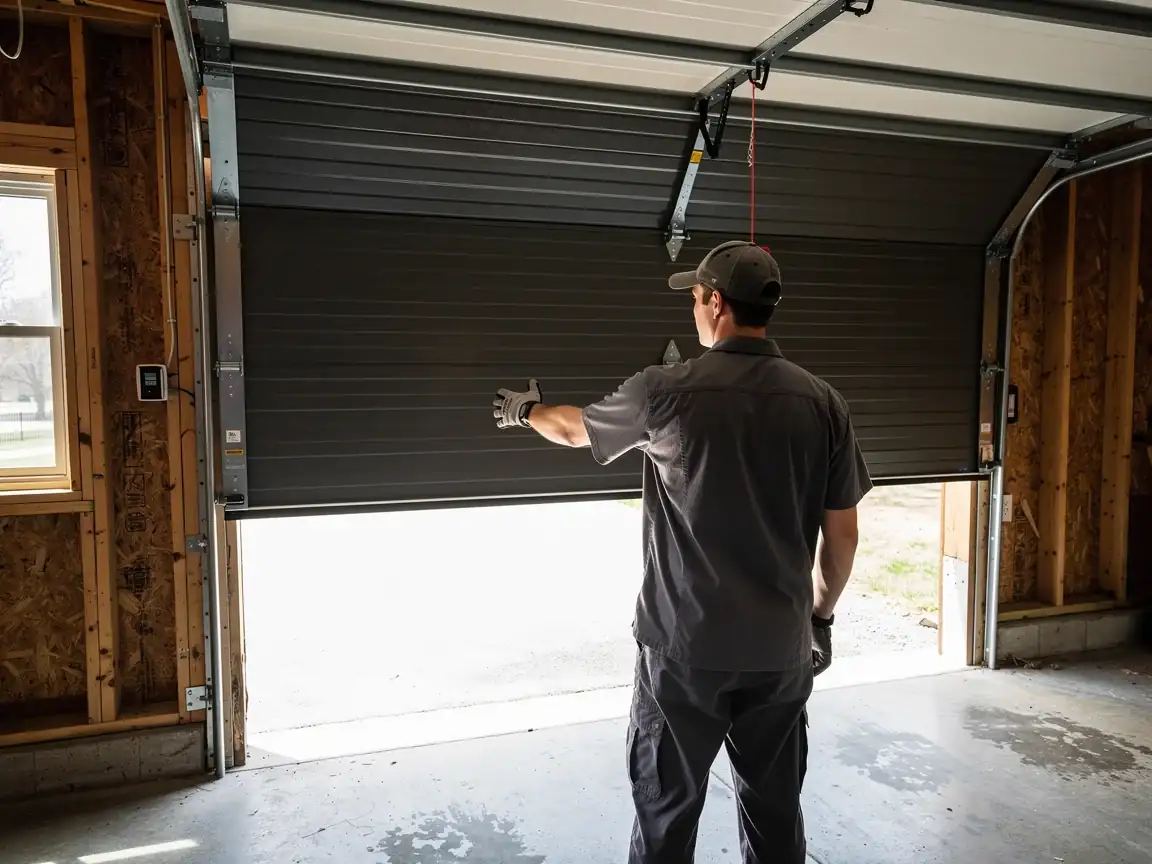
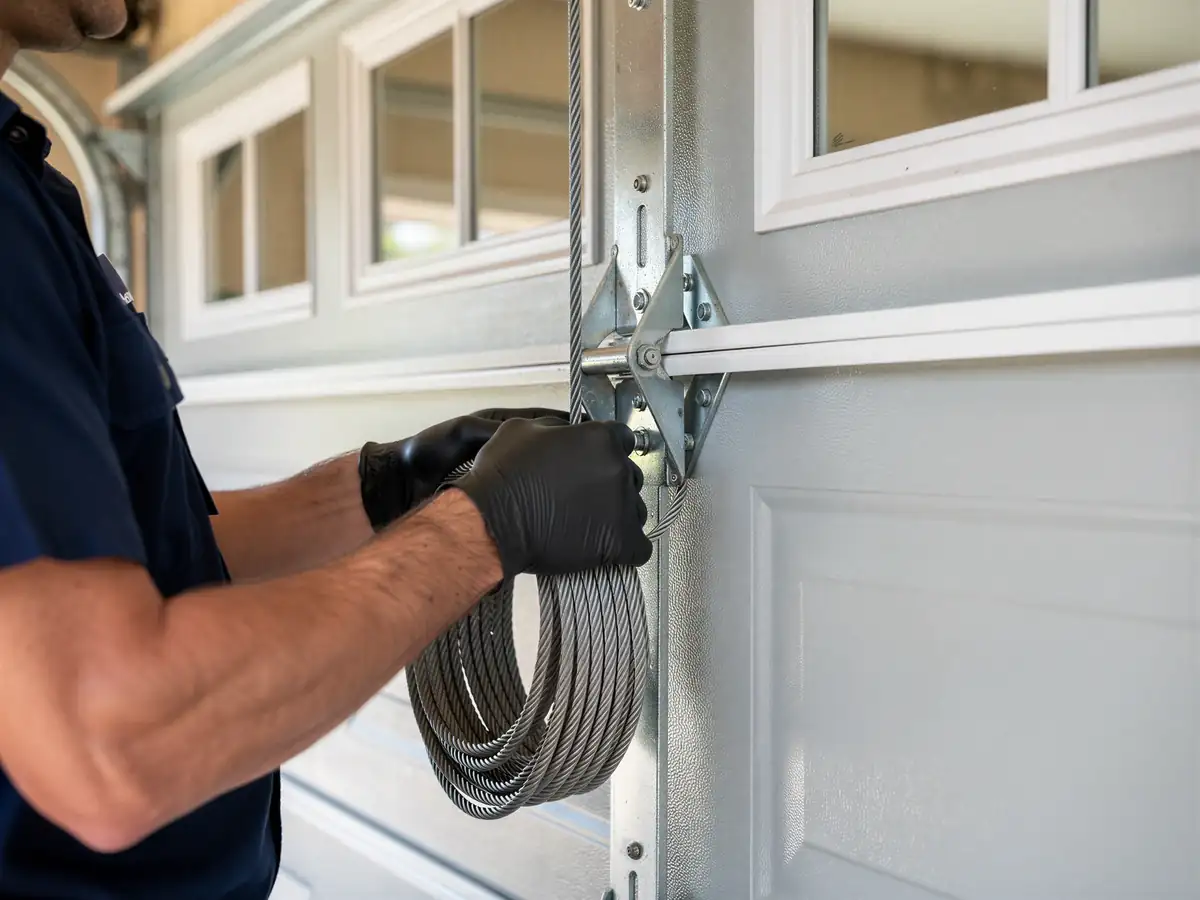
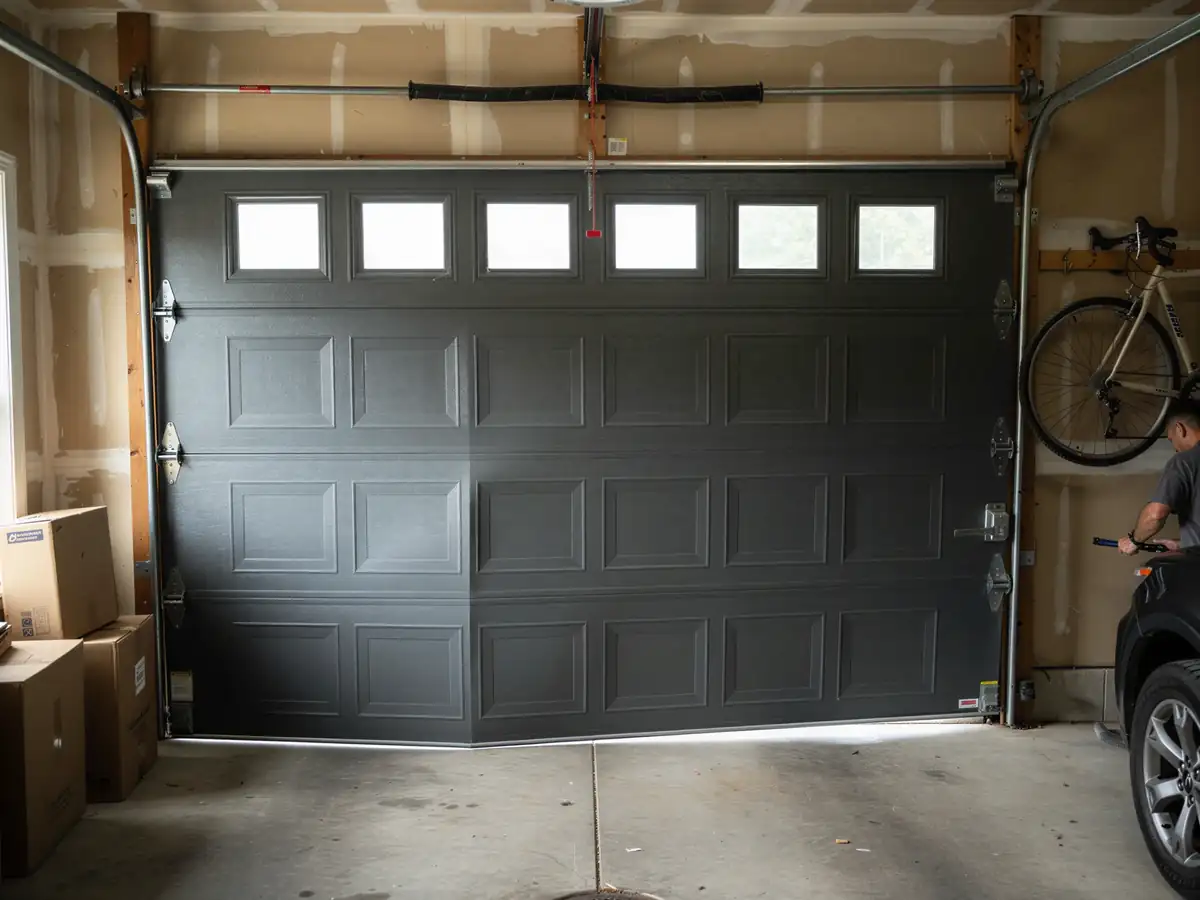
Call if the door is noticeably heavier to lift by hand than it used to be - that's usually a spring losing tension, and on an older torsion setup it's not a safe DIY fix. Call if you hear a bang or pop and the door won't open afterward; that's often the spring letting go rather than the opener failing. Call if one corner of the door sits lower than the others when it's down, which points to a bent track or a broken cable rather than anything cosmetic.
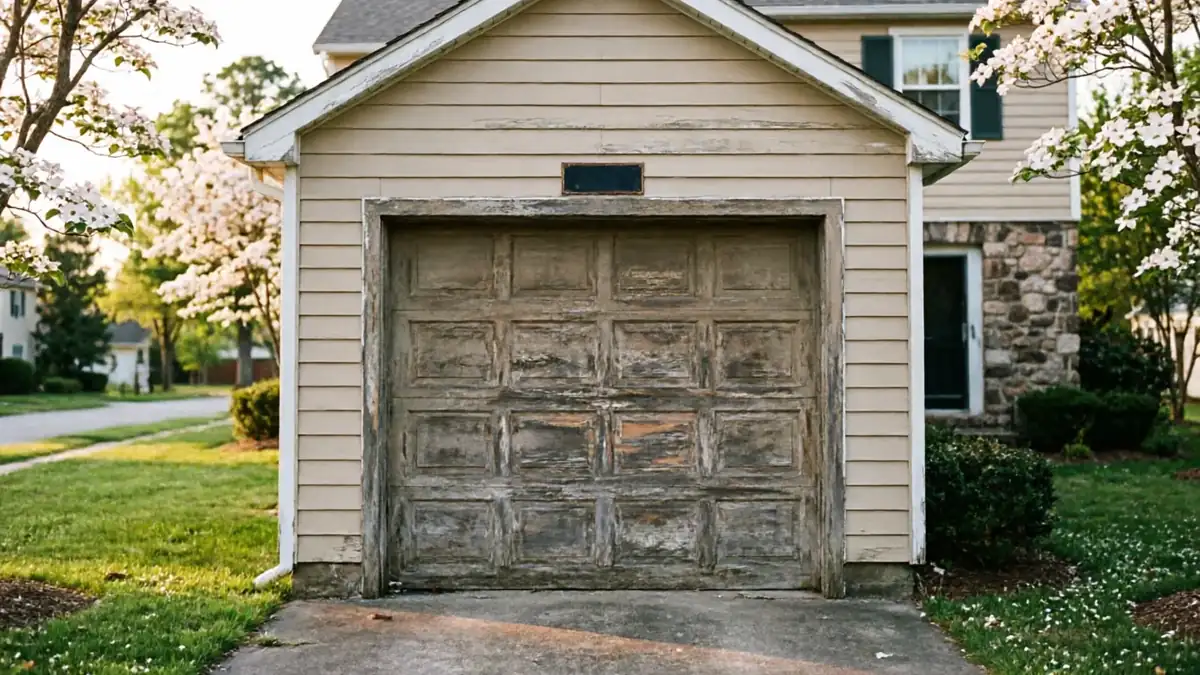
Here's the honest limit: if the panels themselves are rusted through or the door has been struck hard enough to bow the frame, that's a replacement conversation, not a repair call. We'll tell you straight if that's what we're looking at rather than billing you for patchwork on a door that won't hold adjustment. Most of the time on a house in this area's typical build range, though, what's failed is a spring, a cable, or a section of track - all repairable without touching the panels.
Doing Nothing For Now
If the door still opens and closes smoothly, holds its position halfway, and isn't making new noise
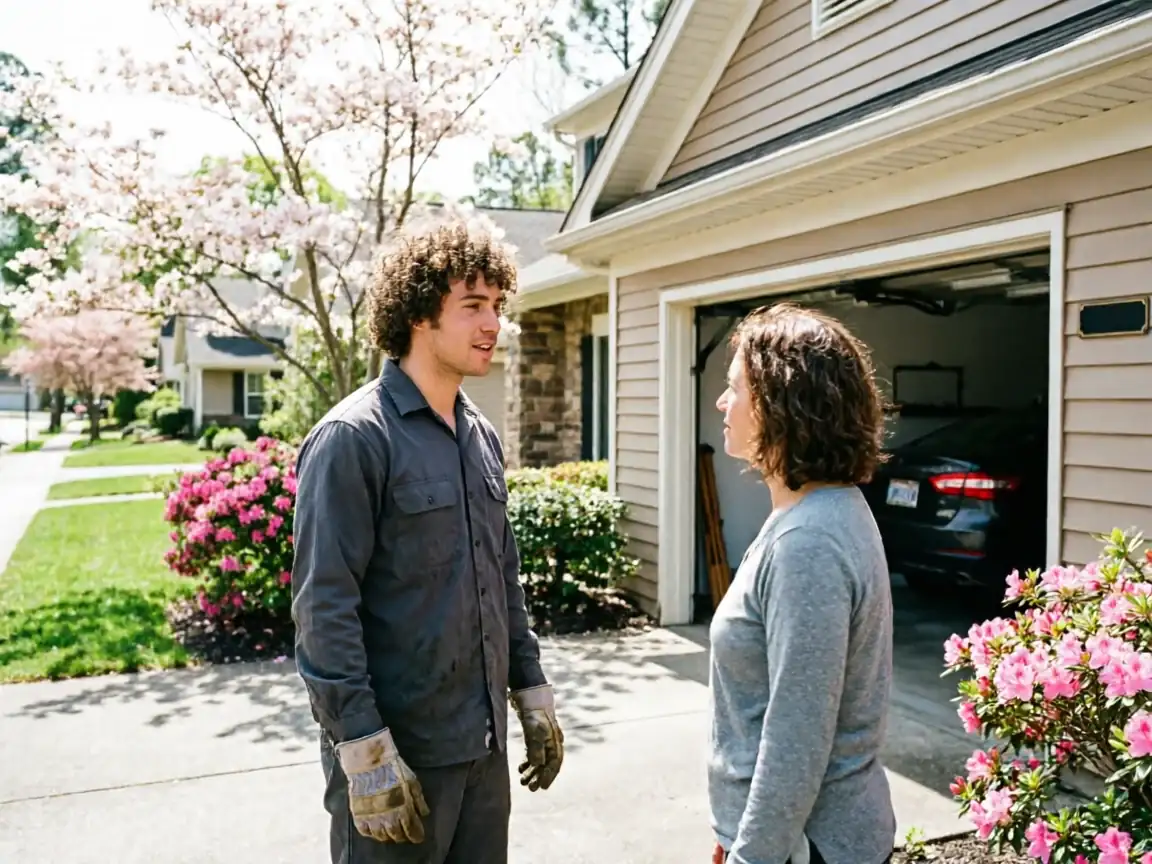
It's fine to leave alone. A door with original hardware from the 1980s or 90s that's still balanced and quiet doesn't need work just because of its age. Median household income across the service area runs around $76,424, and a lot of households here are owner-occupied houses that have had one or two owners total - plenty of these doors have just been maintained along the way rather than replaced.
What's not worth waiting on is a spring that's visibly stretched or rusted
Or a door that's started binding in the track. Those get worse on their own, and a spring failure under load can bend the door it's attached to. If nothing's changed in how the door sounds or moves, there's no reason to call. If something has changed, the sooner it gets looked at, the less likely it is to take a track or a panel down with it.