How We Fix It
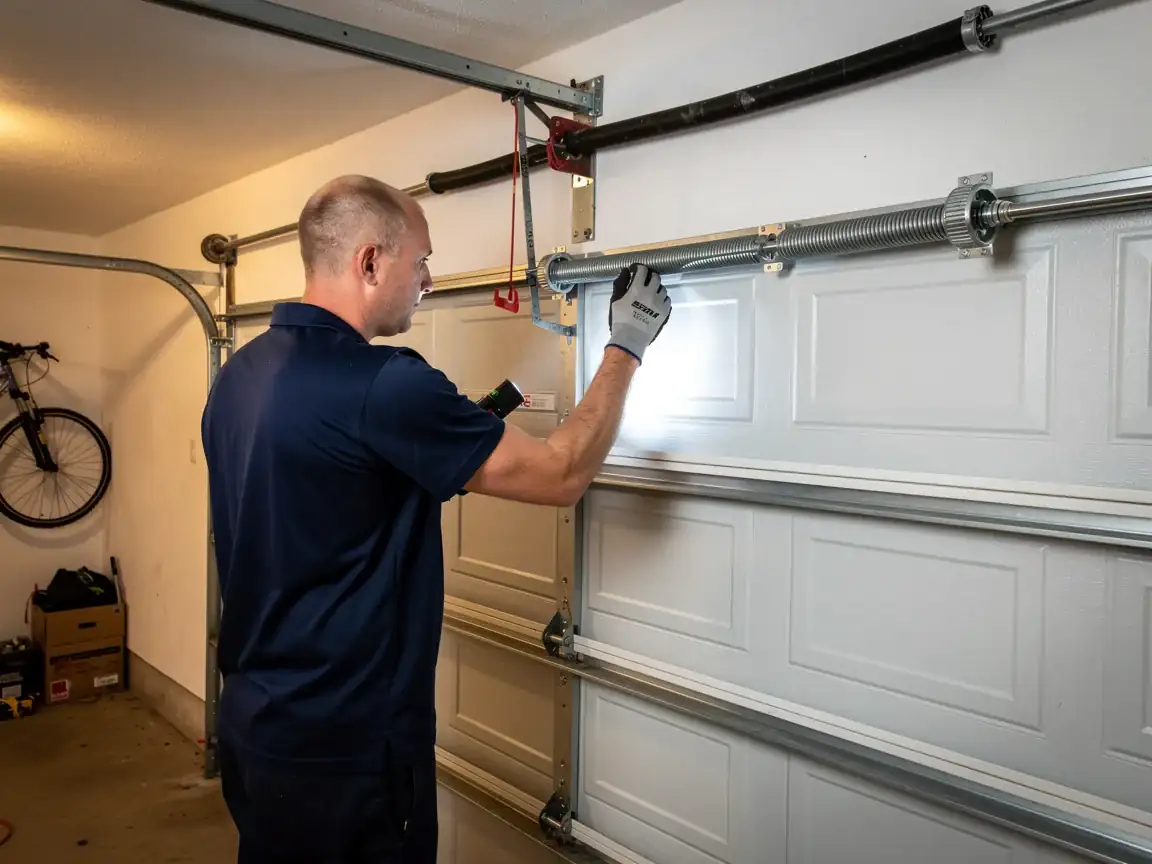
We start by looking at what's already hanging over your door
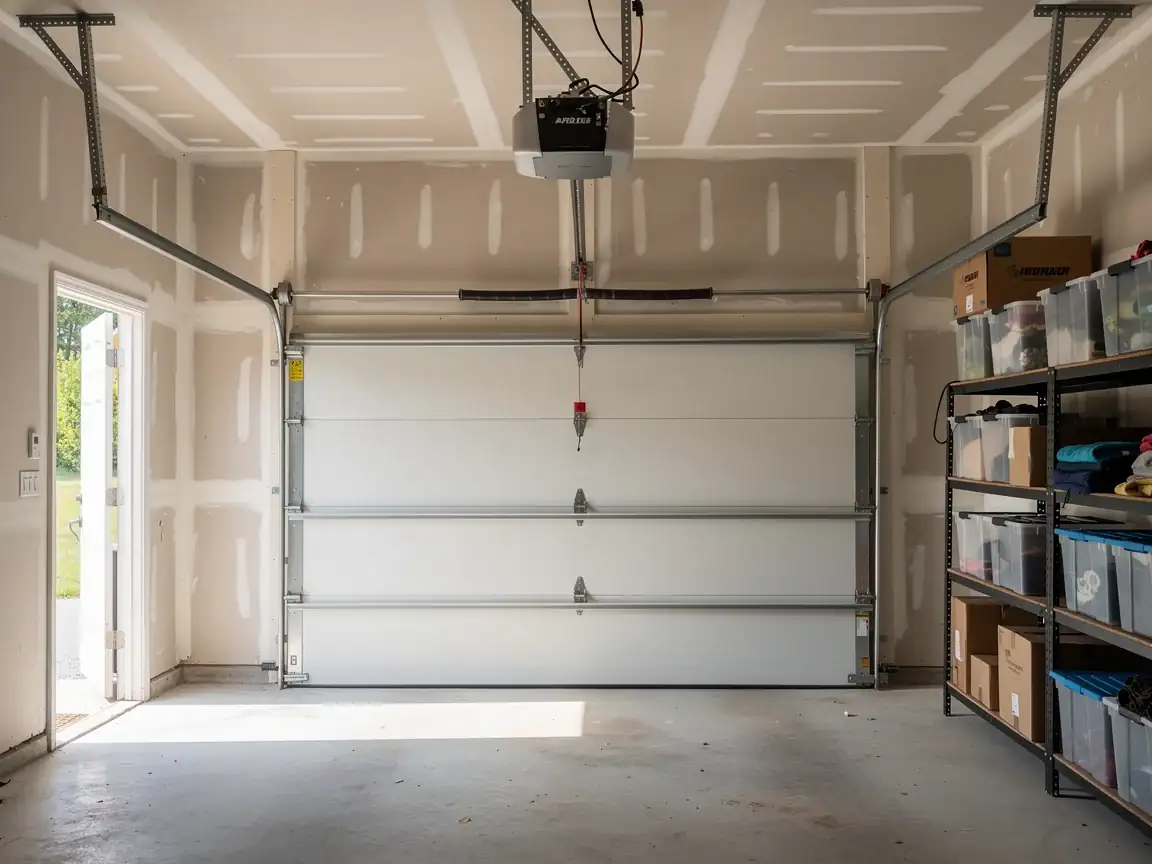
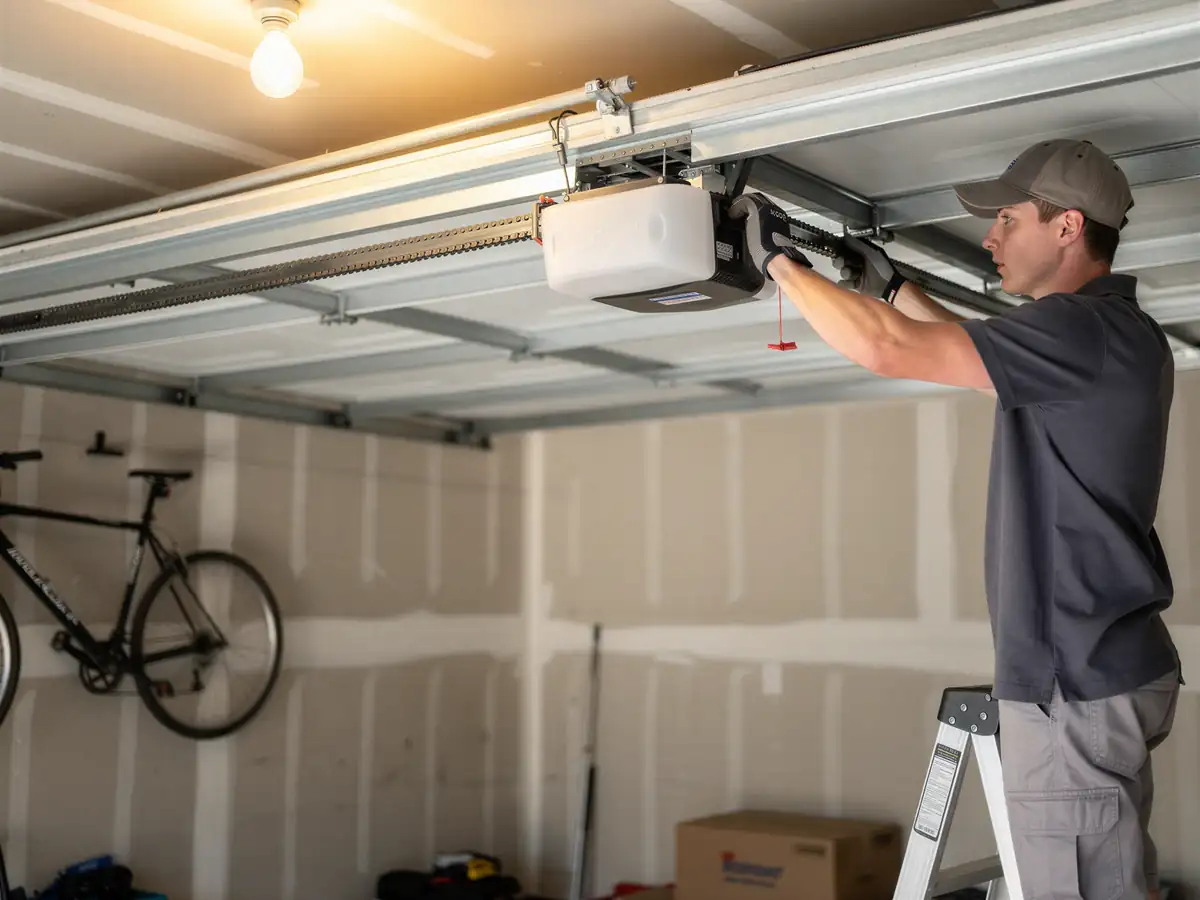
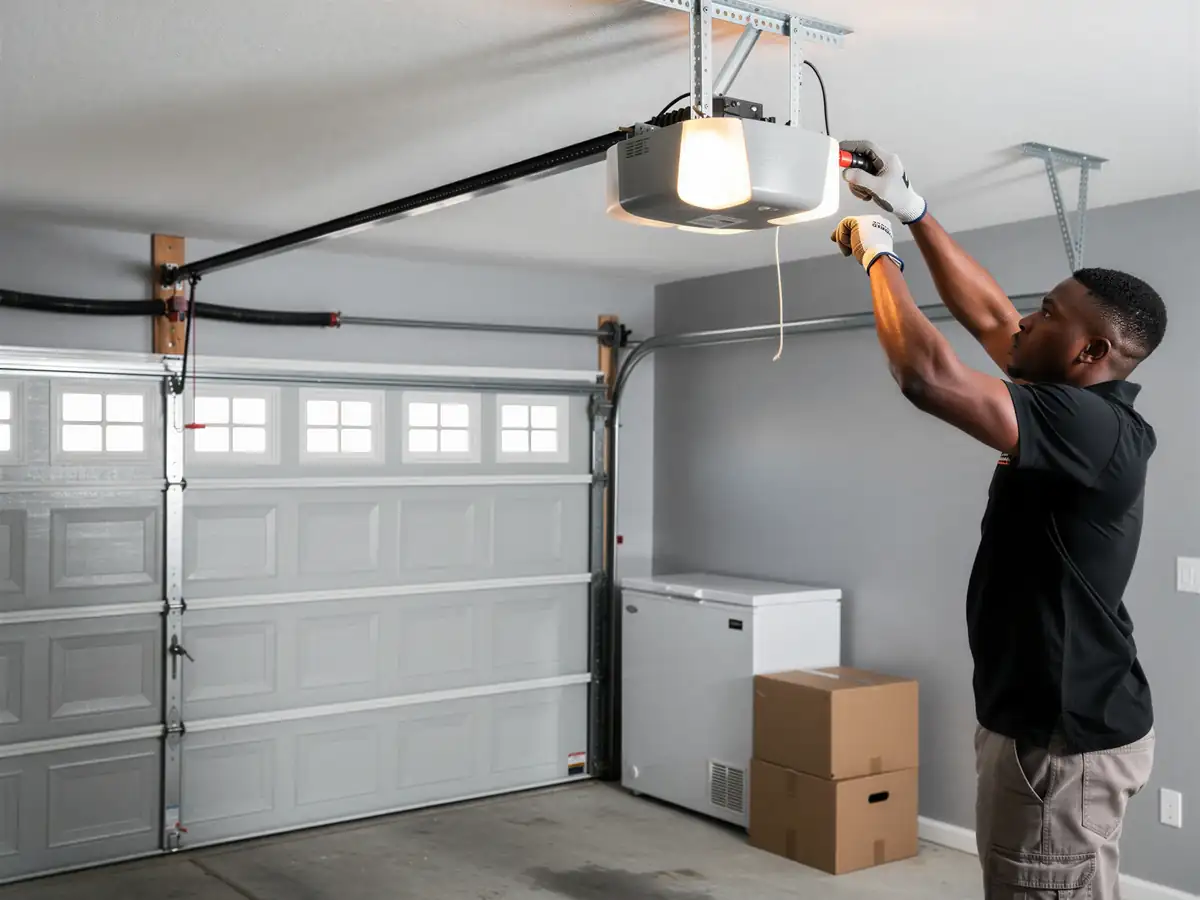
The rail, the J-arm, and the bracket the old motor was bolted to. Houses in this service area were built anywhere from 1964 to 2007, with most of the stock going up in the 1980s and 90s, so we see a lot of header boards and track setups from that era that a brand-new opener wasn't designed to bolt straight onto. We match the opener to the door's weight and the drive type that fits the existing rail - chain, belt, or screw - rather than forcing a mismatch.
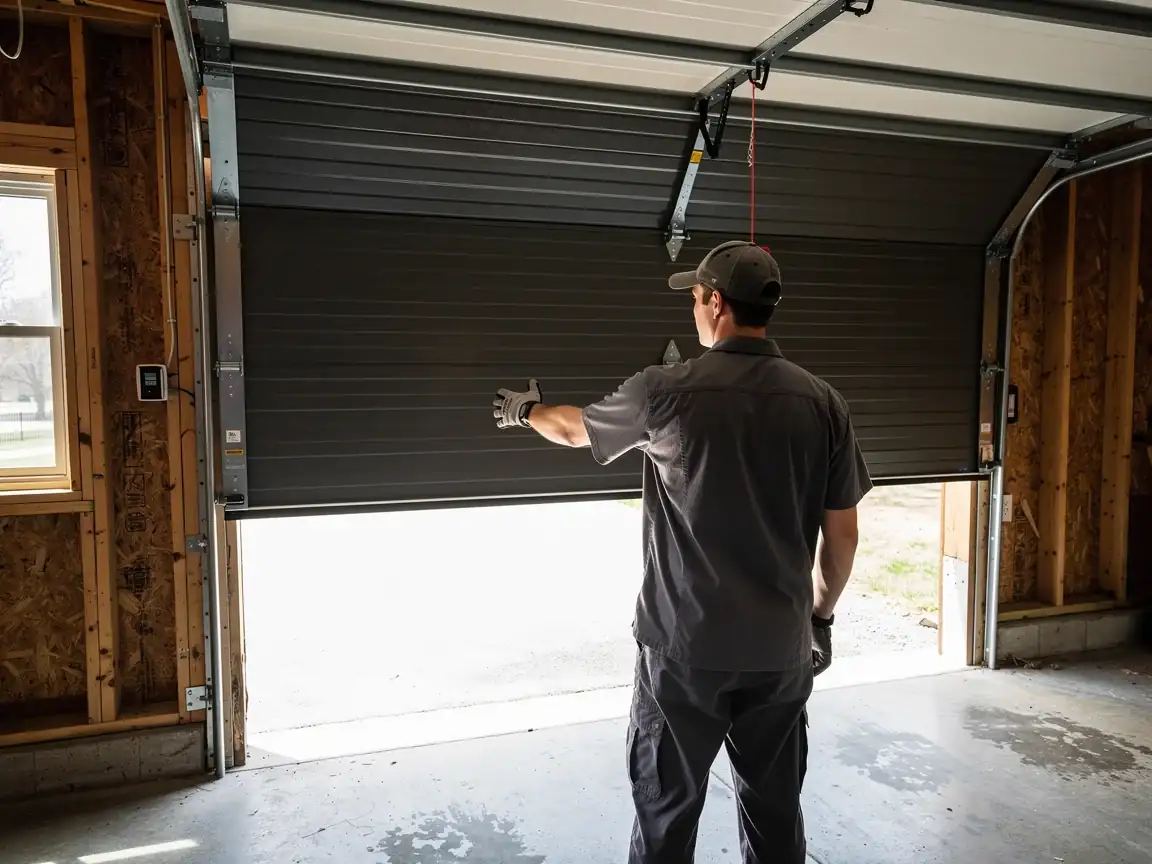
Once the unit's mounted, we set the travel limits, dial in the force settings so the door doesn't slam or stall
And wire in the safety sensors at the base of the track. We test the auto-reverse function before we leave, because that's the part that actually keeps someone's hand or a pet out of the way.
One limitation worth saying up front
If your header board is cracked, sagging, or was never built to carry a heavier opener, we'll tell you that before we install anything. Bolting a new motor to bad wood doesn't fix the problem - it just moves it a few months down the road.
Doing It Yourself
Some of what keeps an opener running is simple enough to handle yourself. Wipe down the photo-eye sensors near the floor - a film of dust or a spiderweb across the lens is still one of the most common reasons a door won't close on command. Check that the sensor brackets haven't been bumped out of alignment; both lights should glow steady, not blink.
Reprogramming a remote or keypad is usually a button-press sequence on the motor unit itself, and most manuals for openers made in the last fifteen years walk through it in a few steps. If your garage sees damp winter air, a light coat of the right lubricant on the chain or screw drive - never on the belt - keeps things from binding up.
Where we'd stop you: swapping the opener itself isn't a job to improvise if your header board needs reinforcing first, or if the old unit is wired into a circuit that was never pulled to code. That's structural and electrical work, not a Saturday project, and getting it wrong risks the door coming down wrong, not just the opener failing again.
Why It Happens Here
This service area's housing runs from 1964 through 2007, with the bulk of it built through the 1980s and into the 90s across nine named communities. A lot of those houses got their original garage door opener when the house went up, which means plenty of units out there are pushing three decades or more past what any drive train is built to handle.
The climate band here sits cold-moderate - not brutal winters, but enough of a swing that grease in an aging chain-drive opener stiffens in the cold months, and that's when the motor starts straining to pull a door it used to move without effort. Add in houses with nearly nine thousand owner-occupied units across the broader area, many sharing that same build-era hardware, and the pattern repeats block to block: original opener, original rail, now struggling.
It's not usually one dramatic failure. It's a motor working harder each winter until a gear strips or a capacitor gives out, and the owner notices the door's gotten slow, loud, or unreliable before it quits outright.
What You Are Seeing
The door doesn't move but the motor hums or clicks
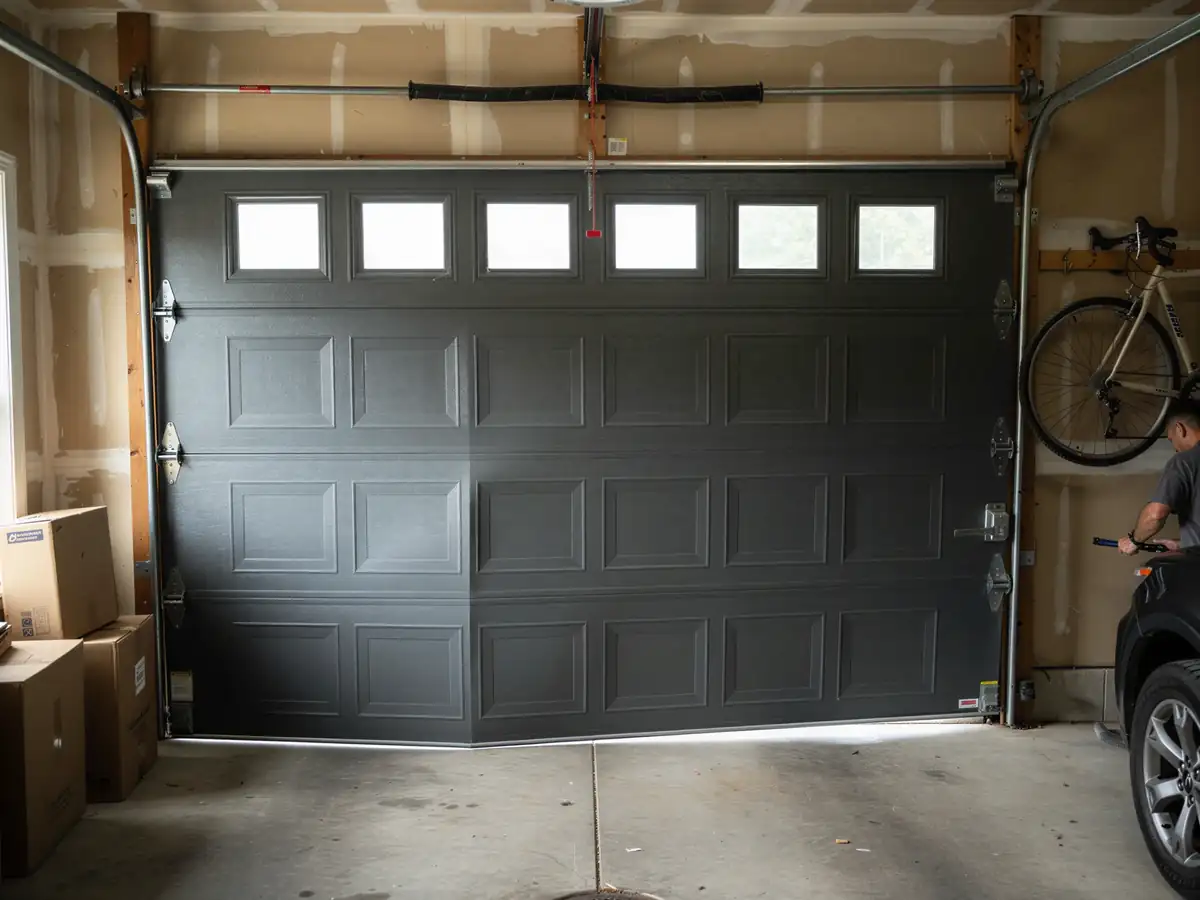
That's often a stripped gear inside an older chain-drive unit, especially common in the opener-original houses from this area's 1980s building wave. A door that reverses halfway up or down, with no obvious obstruction, usually means the force or limit settings have drifted, which happens gradually as components age rather than all at once.
Grinding or a sharp metallic noise partway through the cycle often points to a worn drive gear or a rail that's lost its lubrication entirely
If the remote works from six feet away but not from the driveway, that's a weakening antenna or a dying circuit board, not a battery problem most of the time.
A light that blinks instead of staying solid when the door tries to close is almost always the safety sensor pair
Either misaligned or blocked - and it's worth checking before assuming the whole unit needs replacing. Not every one of these symptoms means a new opener. Sometimes it's a fifteen-minute sensor fix. We'll tell you which one it is before we quote a replacement.