Why It Happens Here
Start with the money, because it changes the conversation
Holly Springs sits at a median household income of $111,224, well above the $76,424 median across the rest of the service area we cover out of Cartersville. That matters because it moves the repair-or-replace line. On a door that's ten or twelve years old, a homeowner here is less likely to want three patch visits and more likely to just replace the opener or the whole door assembly once, correctly, and move on.
The housing itself backs that up
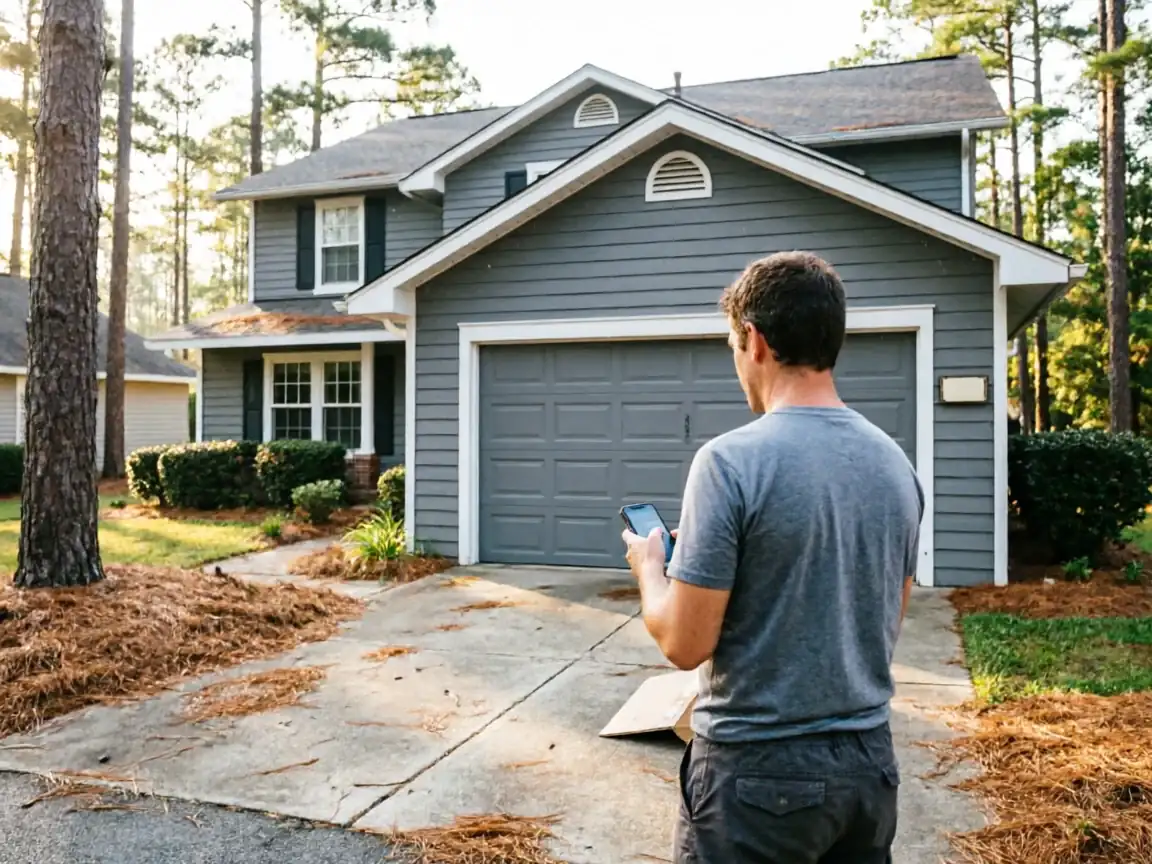
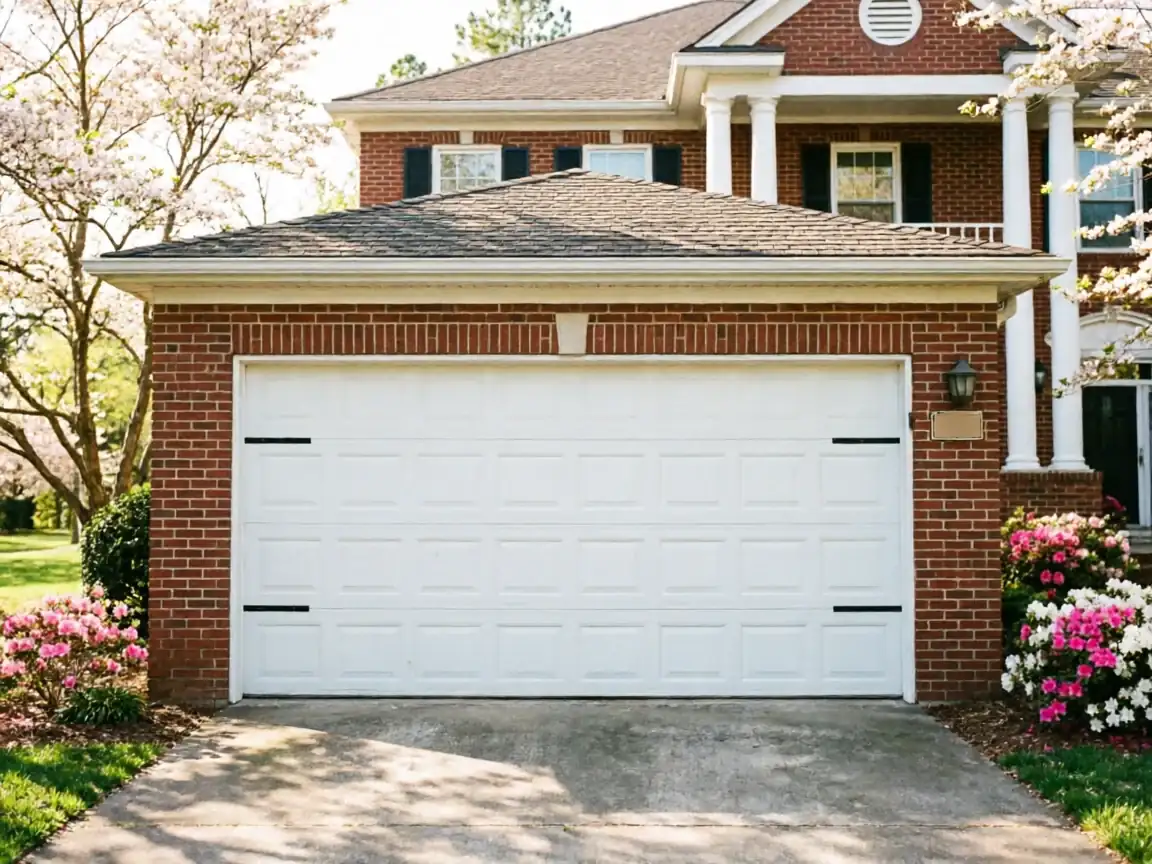
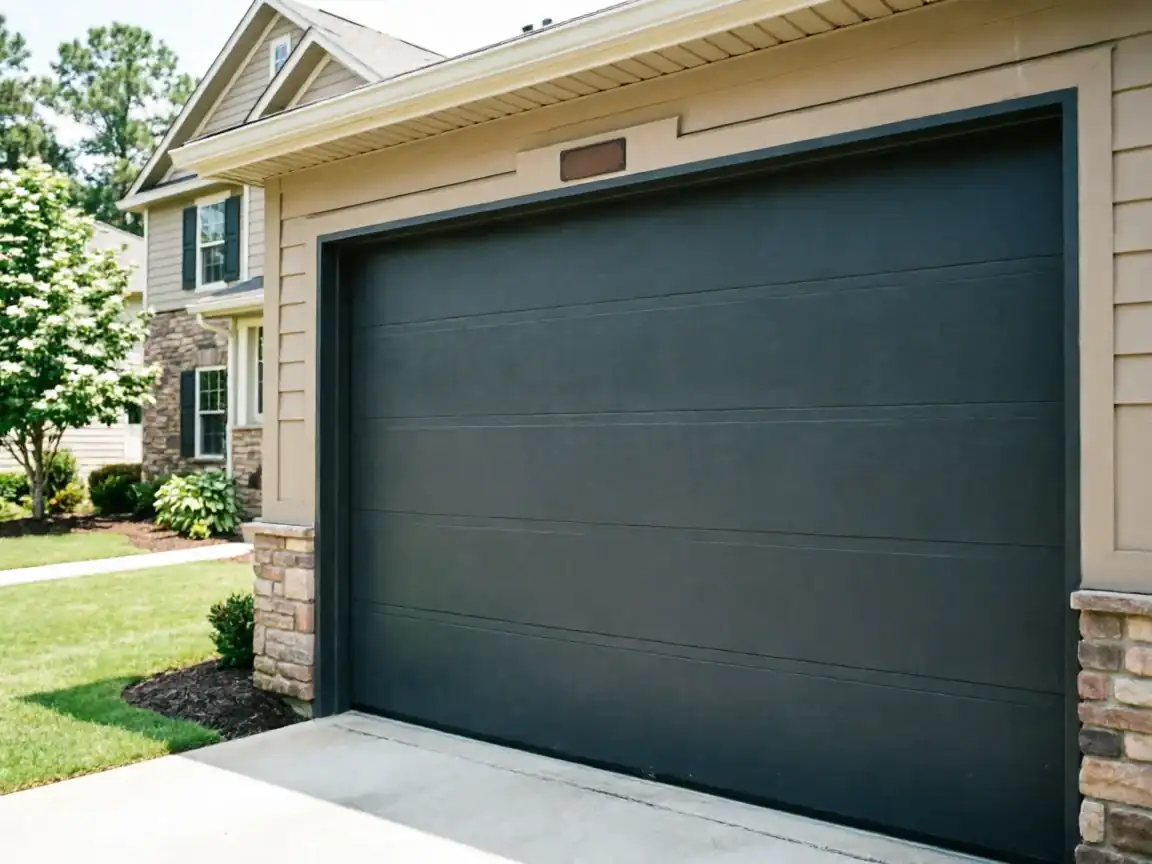
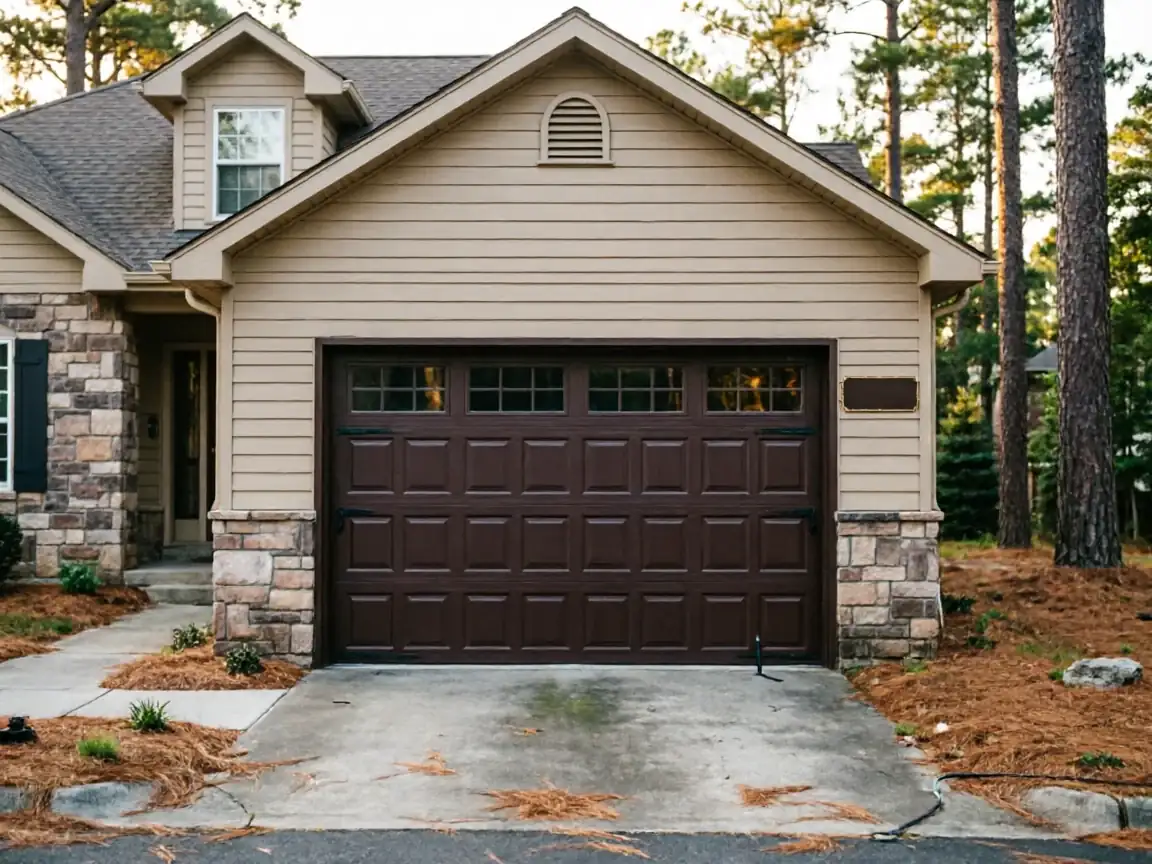
Most of the stock here went up closer to 2007 than to the 1980s builds common elsewhere in the area, so you're not dealing with the original one-piece wood doors or side-mounted torsion setups we see on older streets. You're dealing with steel sectional doors and chain-drive or belt-drive openers that are now old enough to need a board, a sensor, or a drive gear - not old enough to need a full teardown. A torsion spring rated for roughly 10,000 cycles, installed around 2007, is simply running out of cycles now. That's wear, not a defect.
How We Fix It
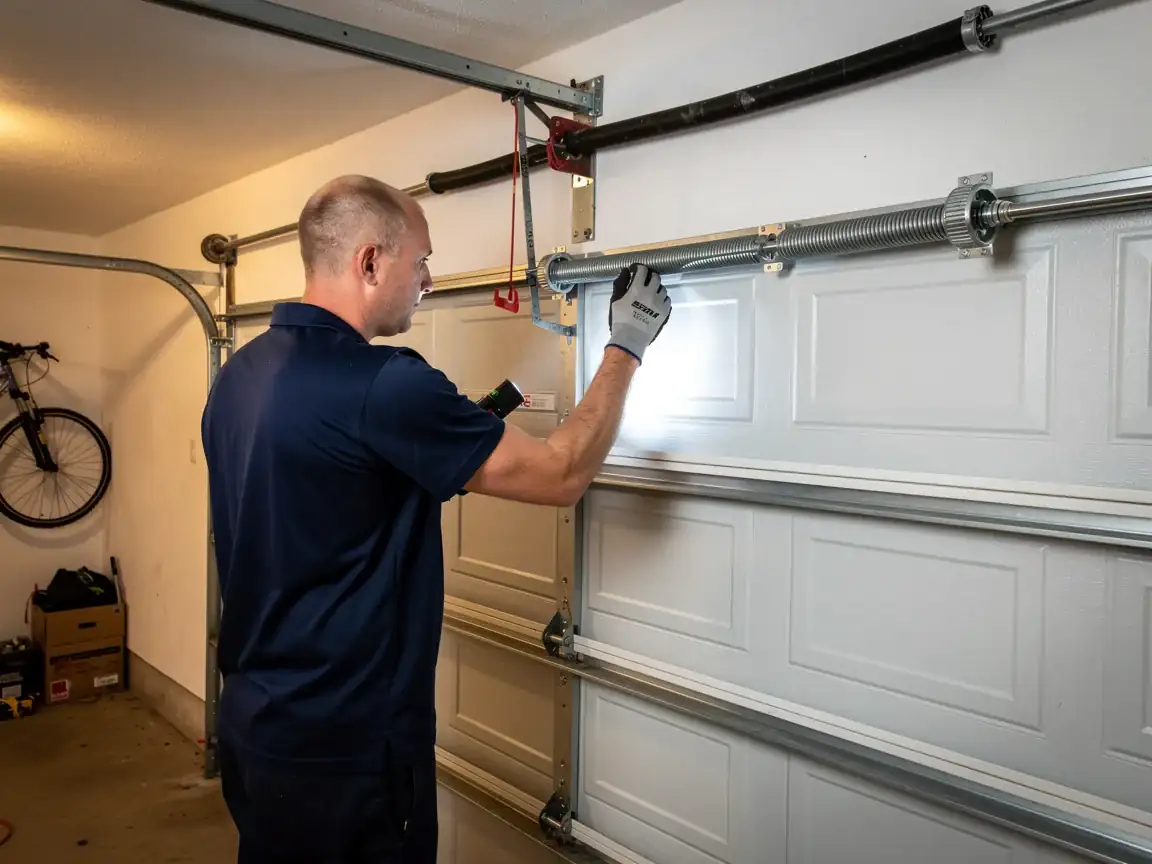
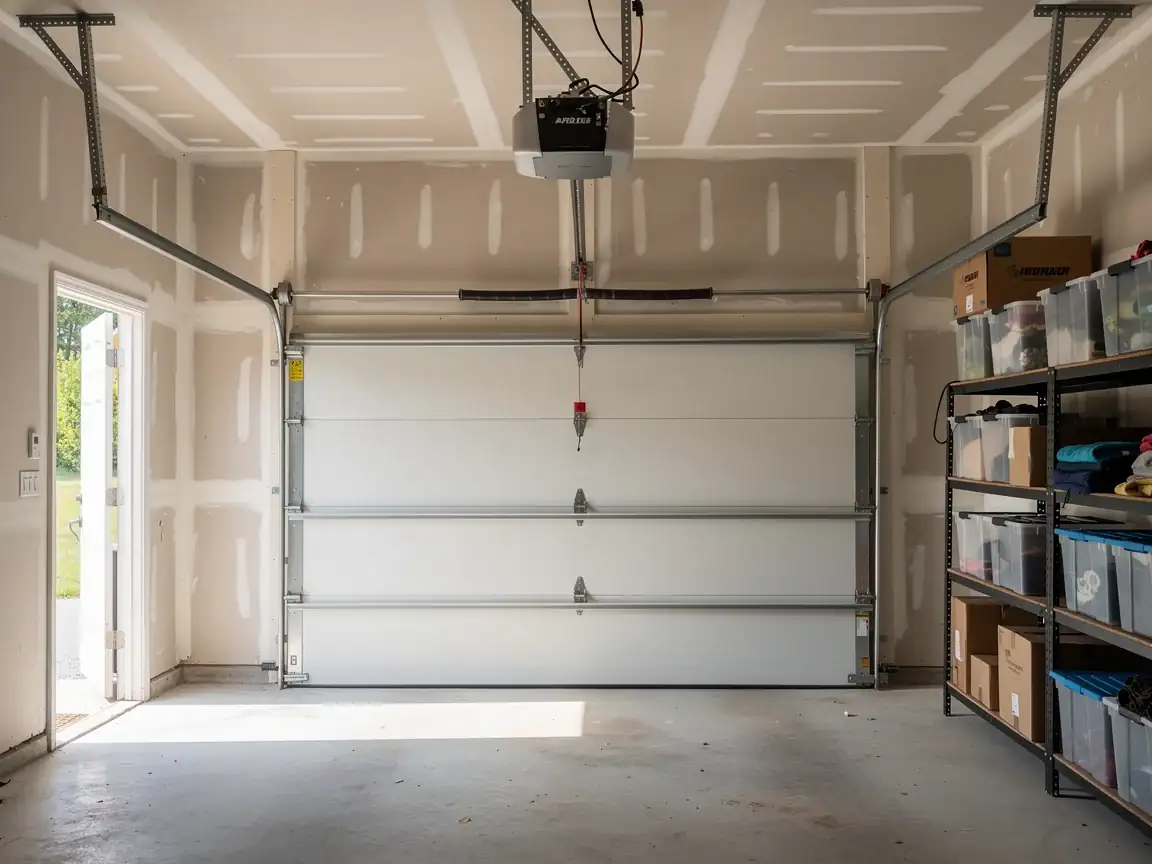
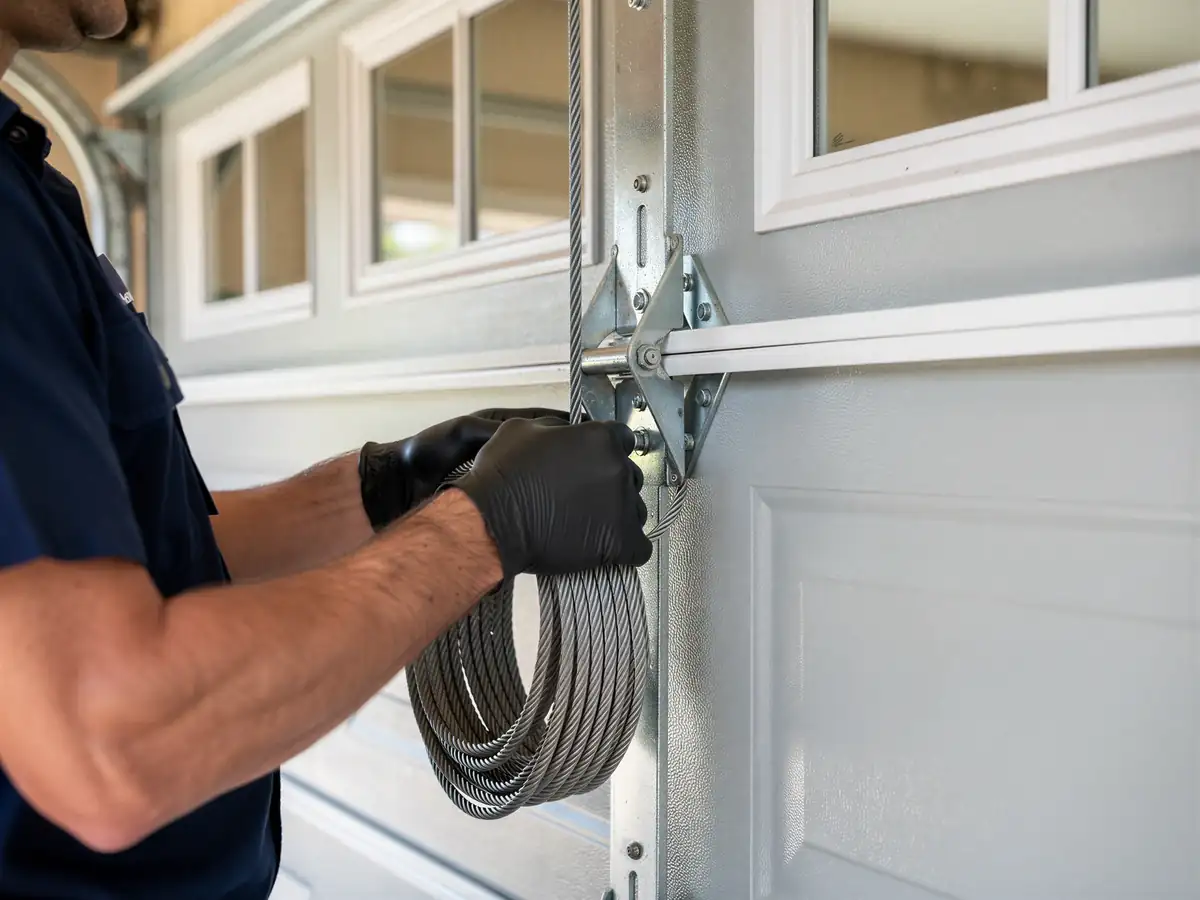
We diagnose before we quote. A dead opener and a broken spring look the same from the kitchen door - the garage door won't move - but they're different jobs with different parts. We check the springs, cables, and rollers first since those are what actually lift the door; the opener just tells it when to go.
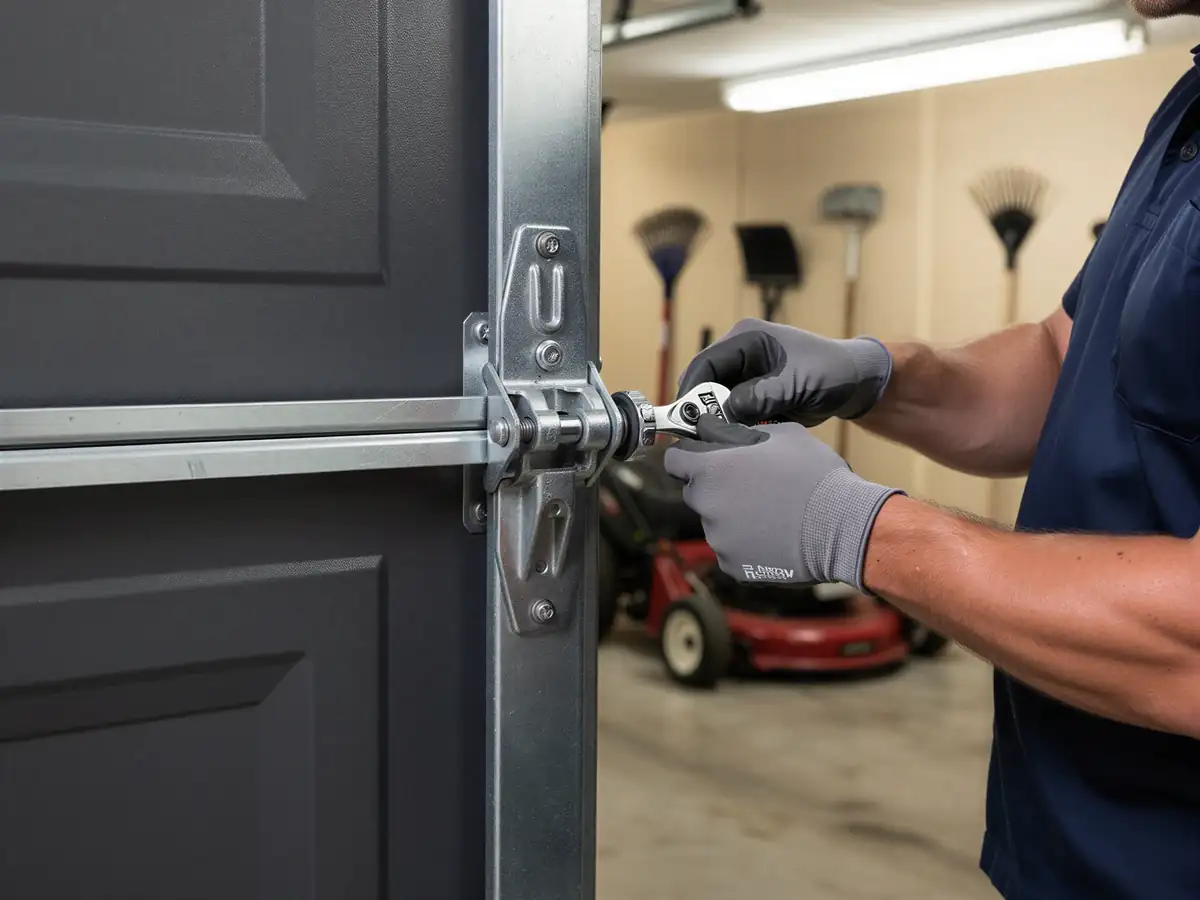
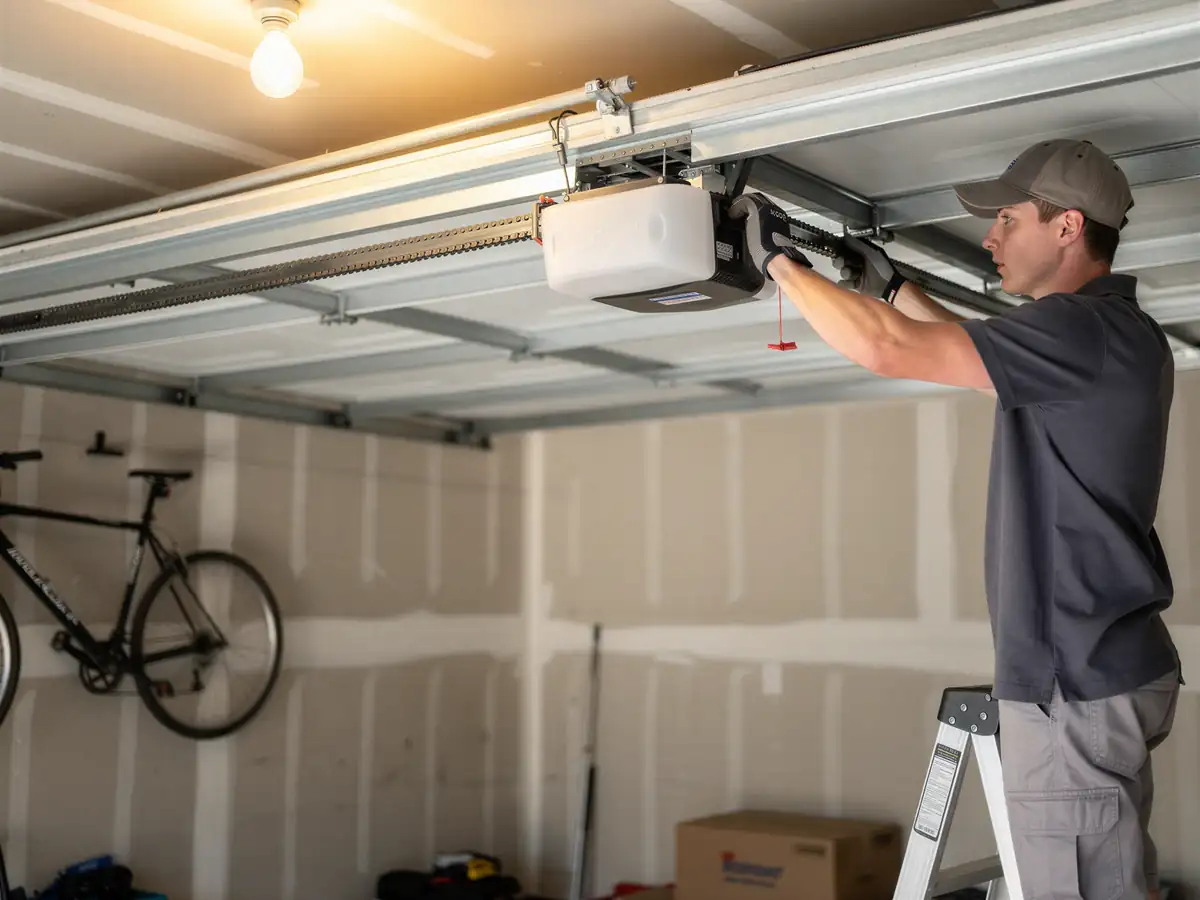
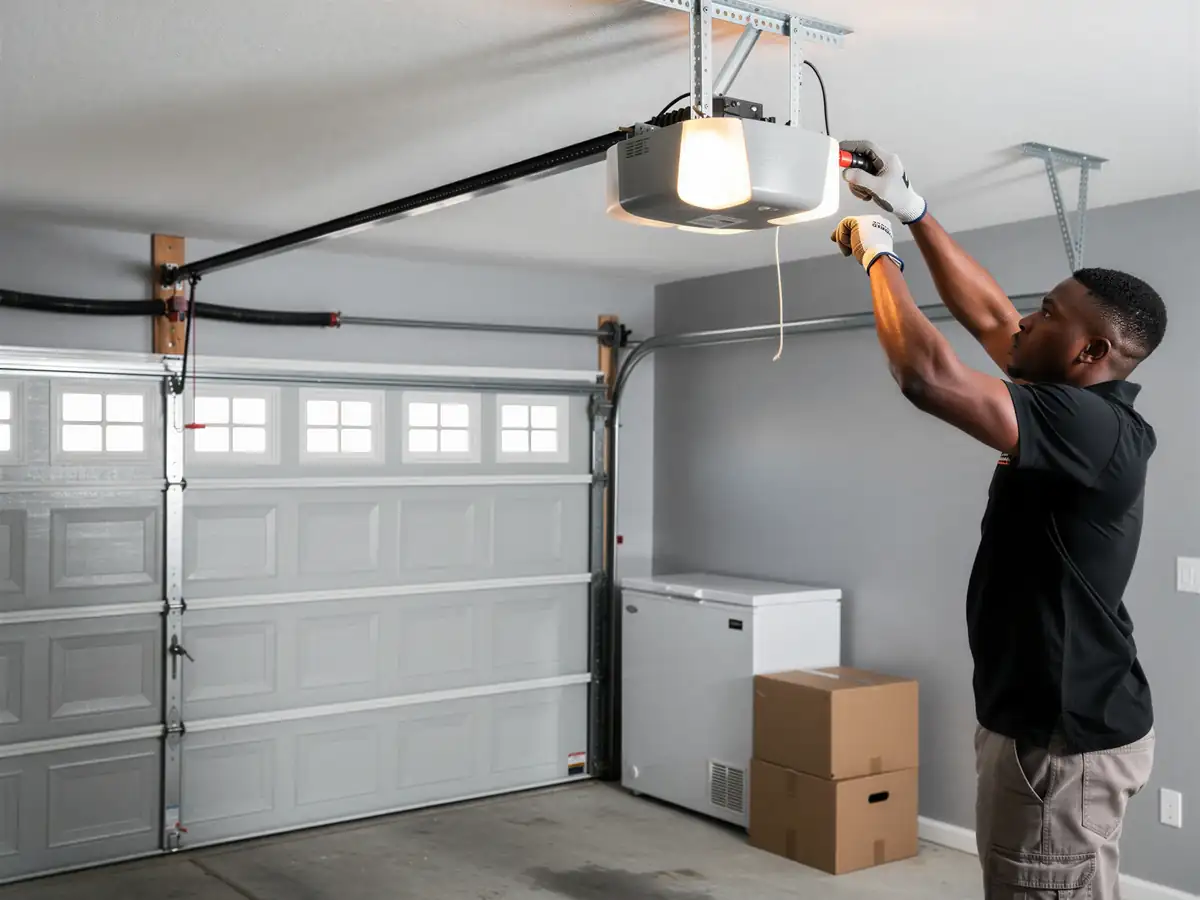
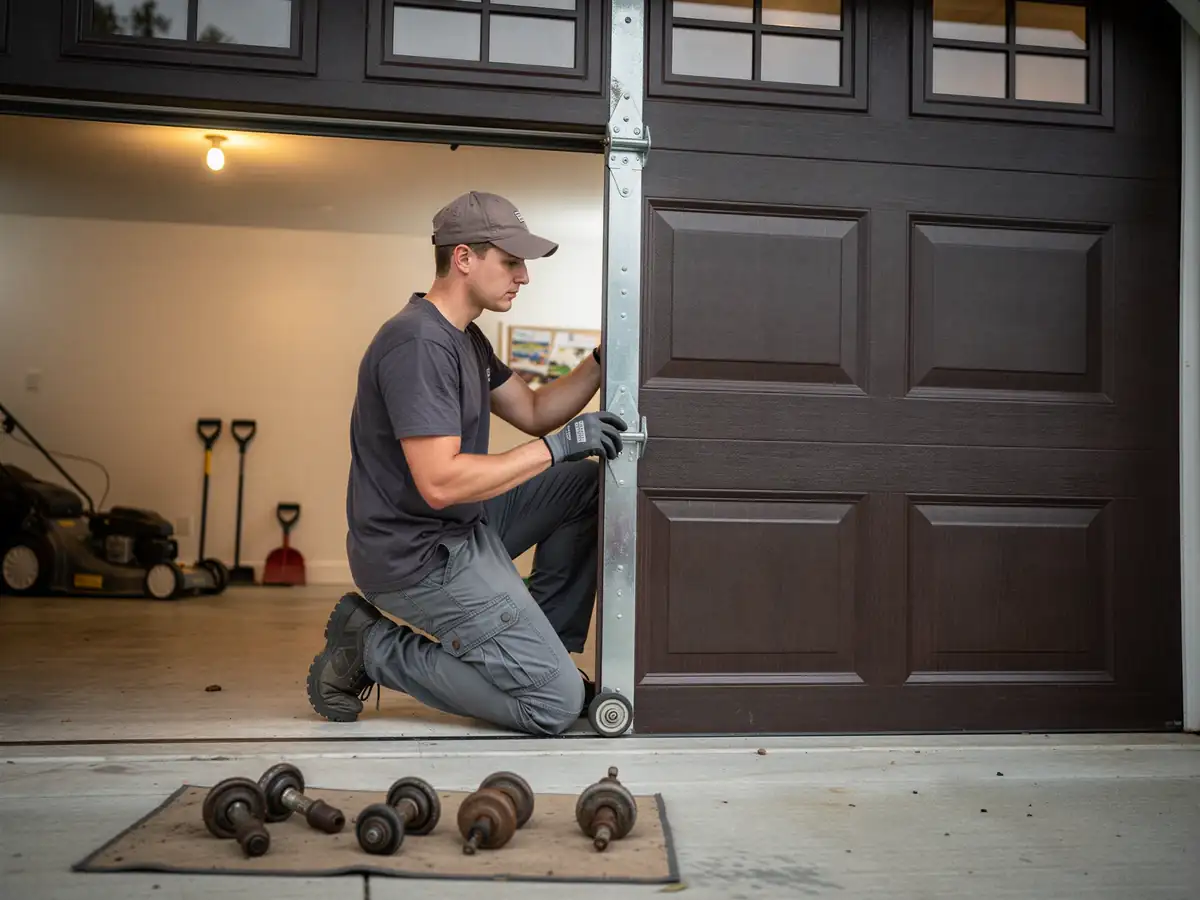
For houses in this part of the service area, the more common call is opener and electronics failure rather than structural hardware failure, simply because the doors are newer. We replace logic boards, drive gears, and safety sensors as needed, and we balance and lubricate the hardware while we're in there regardless of what brought us out, because a door that's out of balance is what kills springs and openers early in the first place.
We do not do cosmetic panel touch-up work. If a panel is dented but the door still runs true and balances correctly, we'll tell you that and let you decide whether it's worth a full panel swap.
Time on the Job
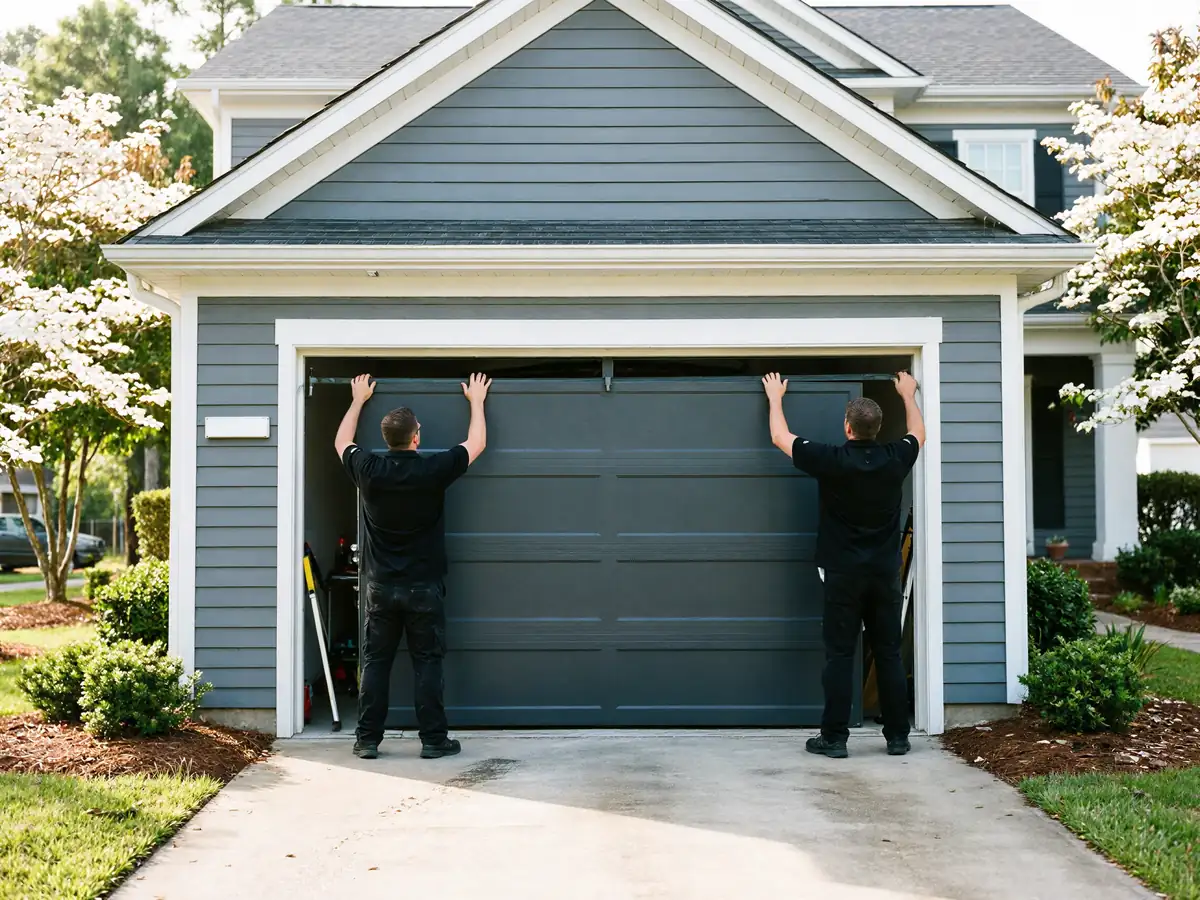
Most single-door opener repairs run under an hour once the truck is on site. A spring replacement on a standard double door takes longer because of the safety steps involved in winding torsion springs under tension - there's no shortcut there regardless of the town.
We travel 18 miles out from Cartersville to reach Holly Springs, which we factor into scheduling rather than into the repair itself. The work at your house takes the same time it would take anywhere; the drive is just part of how the day gets planned. We don't keep a branch or a crew based in Holly Springs - every job here is dispatched from Cartersville, so same-day availability depends on the day's route, not on local presence.
What It Costs
We're not going to quote a number here that isn't in front of your actual door
Because opener boards, spring sizes, and track conditions vary enough that a blind estimate does more harm than good. What we can tell you is how the decision tends to play out at this income level: a repair under a few hundred dollars is worth doing on a door that's otherwise sound, and a full opener swap is worth doing once rather than funding three separate service calls on a unit that's already near the end of its working life.
Given that median household income here runs well above the broader service area average
We see more customers choose full opener replacement over a second or third repair visit - not because the repair doesn't work, but because the math on their time and the unit's remaining life points that way.
The Complications
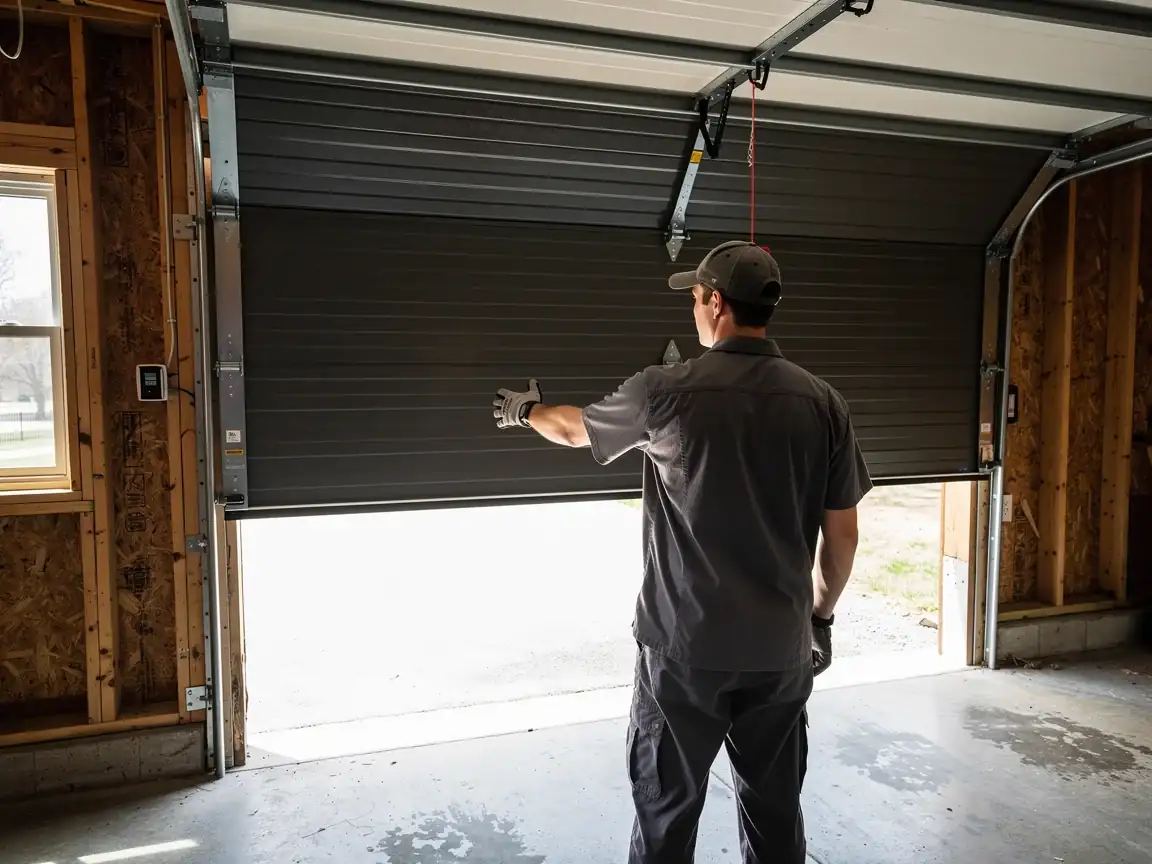
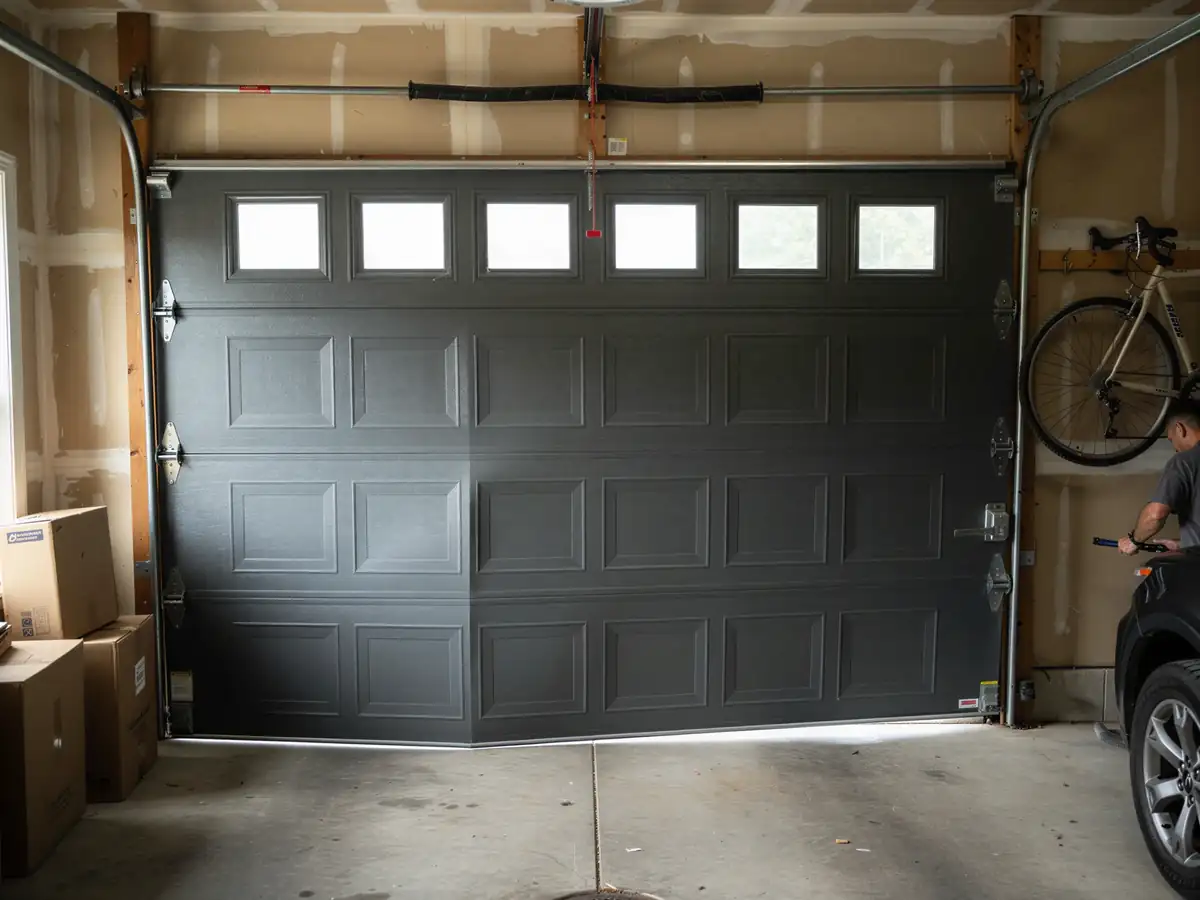
A door that won't close all the way is sometimes a sensor out of alignment, which is a five-minute fix. It's also sometimes a bent track, which is not. We check both before quoting anything, because guessing costs you a second visit.
The cold-moderate climate band this region sits in means seals and weatherstripping take a beating over a winter even without severe storms - rubber gets brittle, gaps open at the bottom corners, and that's often what actually brings the service call, not the door mechanism at all.
One honest limitation: if a part is proprietary to a specific opener brand and the manufacturer is slow shipping it, we can't make that lead time shorter. We'll tell you up front if we're waiting on a part rather than letting the schedule go quiet.
What You Are Seeing
If the door reverses right before it touches the floor, that's almost always the close-limit setting or a sensor issue on a newer opener - common on the 2007-and-later units typical of this area, not a structural problem. If it's silent and dead at the wall switch and the remote, check the breaker first; if that's fine, it's the board or the motor.
A door that opens but creeps or jerks partway up usually means a roller or cable issue, not the opener at all - the motor is straining against hardware that needs attention, and no amount of opener replacement fixes that. Grinding or a loud bang followed by the door refusing to lift is a spring failure, and that one isn't a DIY job regardless of how new the door is.